Look for me on:



What Happens When You Ferment Carrots? Tiny Microbes, Big Benefits
The amazing carrot 🥕
 I love carrots. I eat them, ferment them, juice them, and I’ve written countless articles and recipes about all the amazing things they can do for the body. Most people don’t realize just how powerful this simple vegetable really is.
Food has the ability to nourish us deeply, support healing, and even act like medicine to help create longevity and balance in the body.
And carrots are one of those foods.
What fascinates me most is what happens when you ferment them. The beneficial microbes begin transforming the carrots into something even more powerful — creating enzymes, organic acids, and beneficial compounds that support the gut in incredible ways.
In many ways, the microbes change the carrots… and the carrots help change the gut. 🥕🦠
🦠 Fermentation Unlocks Hidden Compounds

When you ferment vegetables like carrots, the microbes begin breaking down proteins and amino acids into smaller compounds that may become easier for the body to use.
Here’s what’s happening:
🦠 Fermentation Unlocks Hidden Compounds
Raw vegetables contain nutrients that are often trapped inside tough plant cell walls. During fermentation:
- Beneficial bacteria break down fibers and anti-nutrients
- Enzymes predigest proteins and amino acids
- Polyphenols become more bioavailable
- New metabolites are created that weren’t present before fermentation.
🥕 Anti-Fungal Effects
Carrots contain a fascinating natural compound called falcarinol that helps protect the plant from fungi and disease. What’s exciting is that researchers are now studying this compound for its potential anti-inflammatory, cancer-protective, antimicrobial, and antifungal benefits. It’s another reminder that foods often contain powerful protective compounds we’re only beginning to understand. It’s amazing how many powerful compounds are hidden inside simple foods like carrots. [1]
What Makes Cultured Vegetables So Unique

The Microbes Create New Compounds During Fermentation
This is the part that fascinates me. The bacteria don’t just sit on the carrots.
As they ferment, they create:
- Organic acids
- Enzymes
- Beneficial metabolites
- Postbiotics
- Transformed plant compounds
This creates a completely different food than what you started with.
You’re not just eating carrots anymore.
You’re eating a living cultured food that has been transformed by beneficial microbes.
Your Gut and Brain Work Together
One of the most exciting things researchers are discovering is how connected the gut and brain really are.
Your gut microbes communicate with:
- The nervous system
- The immune system
- Hormones
- Neurotransmitter pathways
- The vagus nerve
A fermented carrot is a tiny biochemical factory created by beneficial microbes.
Carrots May Also Help the Body Remove Excess Estrogen

 Carrots contain unique fibers, including insoluble fibers like lignin, that may help support the body’s natural ability to eliminate excess estrogen through the digestive tract. But the gut microbiome also plays a major role in this process.
- Certain strains of Clostridium
- Escherichia coli
- Some Bacteroides species
But it’s not as simple as “good bacteria vs bad bacteria,” because some of these microbes normally live in healthy guts too. The problem usually happens when the microbiome becomes unbalanced.
What seems to help the body eliminate estrogen more effectively is having:
- More microbial diversity
- Plenty of fiber
- Good bowel motility
- Lower inflammation
- More beneficial fermenting bacteria
Beneficial bacteria like:
- Lactobacillus
- Bifidobacterium
This may help support healthier estrogen metabolism by improving gut balance, reducing inflammation, supporting the gut lining, and helping maintain a healthier microbiome.
Fermentation Changes the Sugars Too
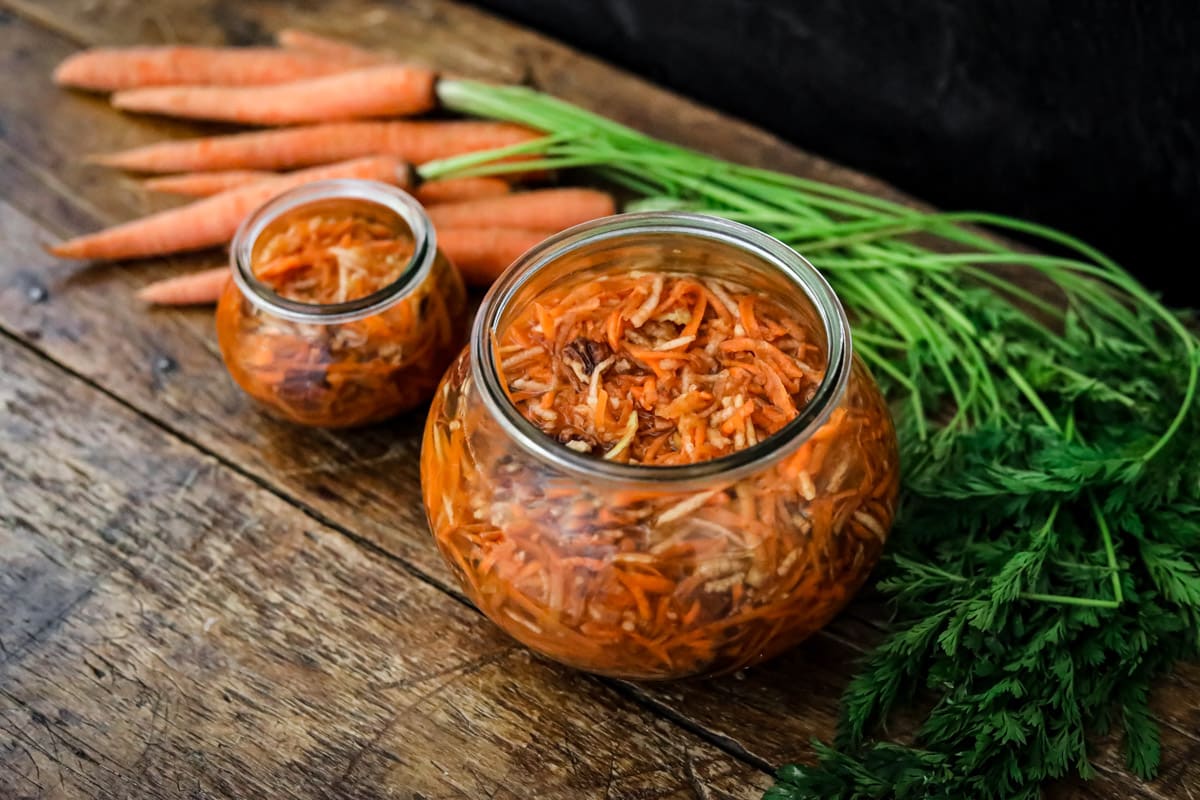 Another fascinating thing about fermented carrots is what happens to their natural sugars during fermentation. As the beneficial bacteria consume those sugars, they transform them into beneficial acids, metabolites, and other compounds that can change the way the food interacts with your body.
Researchers have even found that probiotic-fermented carrots may support blood sugar balance better than regular carrots because the microbes actually transform the carrot fibers during fermentation.[3]
This is one reason fermented vegetables often affect the body differently than raw vegetables.
Many people notice they feel more satisfied, have fewer cravings, and experience steadier energy when they include cultured vegetables with meals. I know I do. 🥕🦠
Carrot Cake in a Jar Video
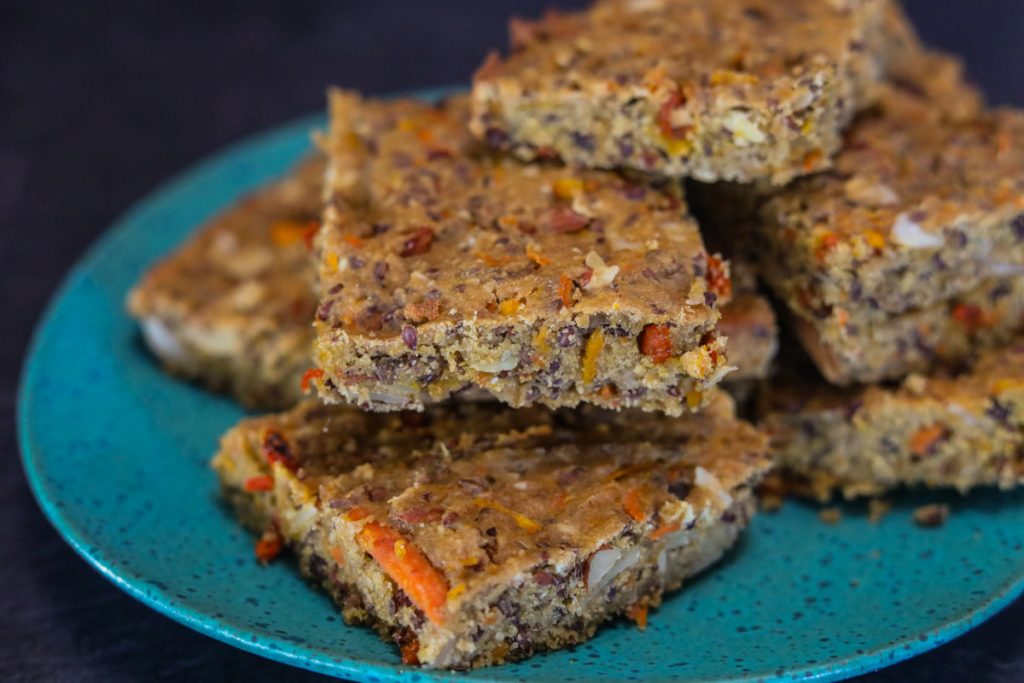
Here is a video I made for my Cultured Carrot Cake in a Jar Recipe!
Check out these Carrot Recipes!




















Listen To My Podcast
In this episode, we explore what happens when carrots ferment and how beneficial microbes may help unlock hidden nutrition inside food. We’ll talk about the gut-brain connection, blood sugar support, estrogen balance, cravings, digestion, and why cultured carrots are so much more than just probiotics.
References I talked about:
Are you on the list?
Sign up today and I'll send you my free Getting Started Guide!
Each week I'll send you updates, tips, recipes, and more! You might even be a winner of my weekly giveaway! (starter cultures, memberships, and more!)
Come be a part of my cultured food family!