
Look for me on:



Three Foods That Can Change Your Life ~ The Trilogy and More

Fermentation is unique and every cultured food has something special to offer. But three foods have become a foundation for my life: kefir, kombucha, and cultured vegetables. I call them The Trilogy.
These three foods changed my life, and over the years I have watched them help my husband, my children, and so many people in my cultured food community. Each one brings its own collection of beneficial bacteria, yeasts, organic acids, vitamins, and fermented compounds. They work differently, which is exactly why I love using them together.
I reach for The Trilogy often but there are two times when I become especially devoted to it: after antibiotics and before cold and flu season.
Antibiotics can be lifesaving, and sometimes we truly need them. But they do not distinguish perfectly between the bacteria causing trouble and the beneficial microbes that help keep the gut balanced. Many people tell me that after taking an antibiotic, their digestion feels different. They may notice bloating, irregularity, loose stools, constipation, or simply not feeling like themselves.
This is when I believe the gut needs nourishment, patience, and a steady supply of diverse fermented foods. Not an attack. Not a harsh cleanse. We want to help the good microbes return and begin crowding out the organisms we do not want.
The same is true as cold and flu season approaches. Much of the immune system is closely connected to the gut. Supporting that community of microbes is one of the most loving things I know to do for my body. When I see anyone in my family coming down with something, I give them this, and often they overcome it without fully getting sick. Used often, and I do kefir every day, it is my magical formula for keeping my immune system strong!
Why I Use All Three
When I first began teaching people about cultured foods, I noticed something again and again. People often felt better after adding one cultured food, but when they learned to enjoy all three, many told me they began to thrive.
This makes sense to me because kefir, kombucha, and cultured vegetables are not interchangeable. Milk kefir contains a complex community of bacteria and beneficial yeasts. Kombucha is a fermented tea with its own microbes, organic acids, and plant compounds. Cultured vegetables provide lactic-acid bacteria along with the natural fibers and nutrients found in vegetables.
Research is beginning to catch up with what traditional cultures have known for centuries. In a Stanford study, people who increased their intake of fermented foods had increased microbiome diversity and decreases in several markers of inflammation. That does not mean one serving cures disease, but it does show us that fermented foods can interact with both the microbiome and the immune system in meaningful ways.[1]
Homemade versions are the ones I love most. They are fresh, alive, inexpensive to make, and you control every ingredient. You also do not need huge servings. Consistency matters more than trying to overwhelm your body all at once.
Three Foods That Changed My Life
Kefir
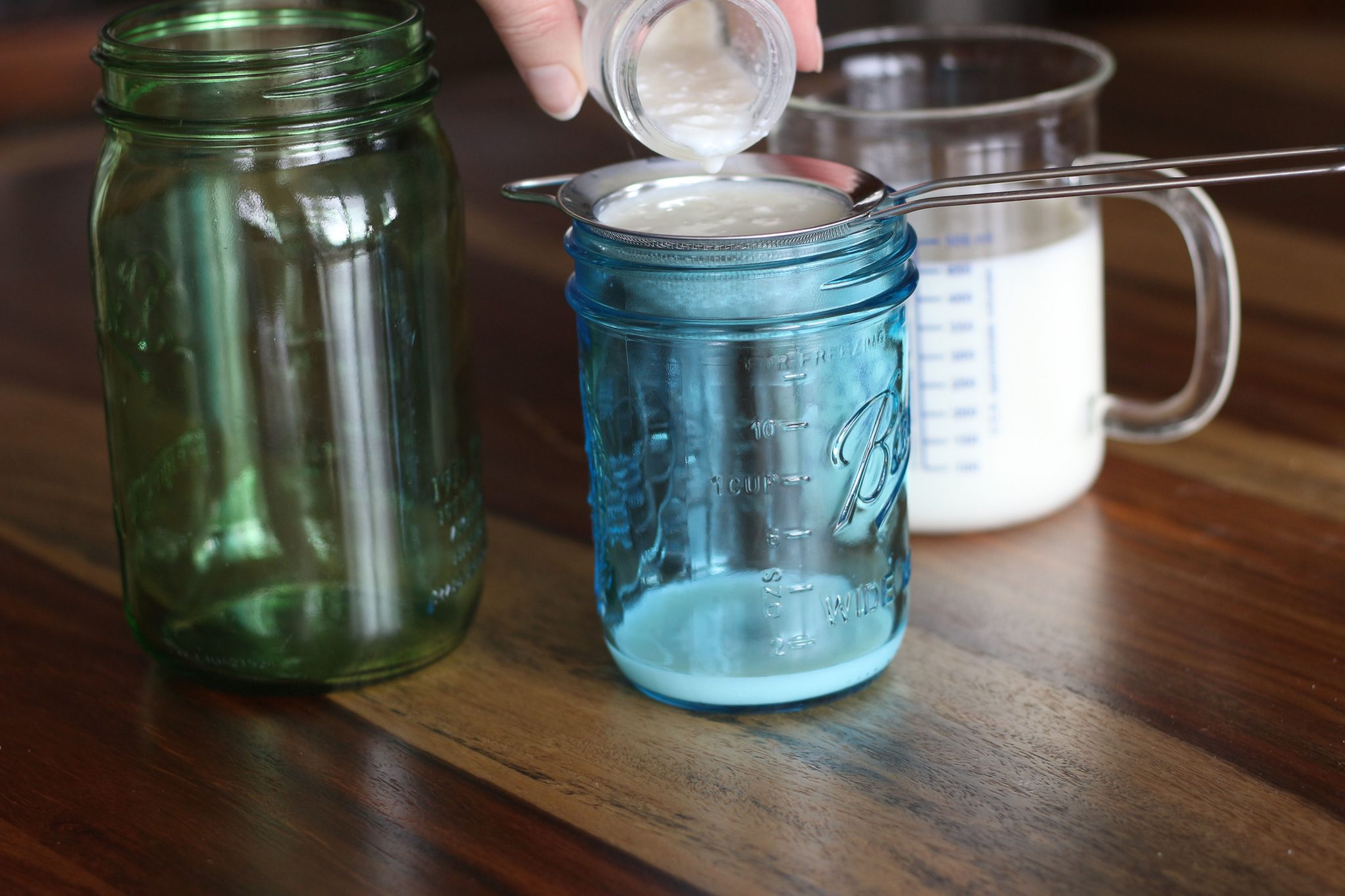
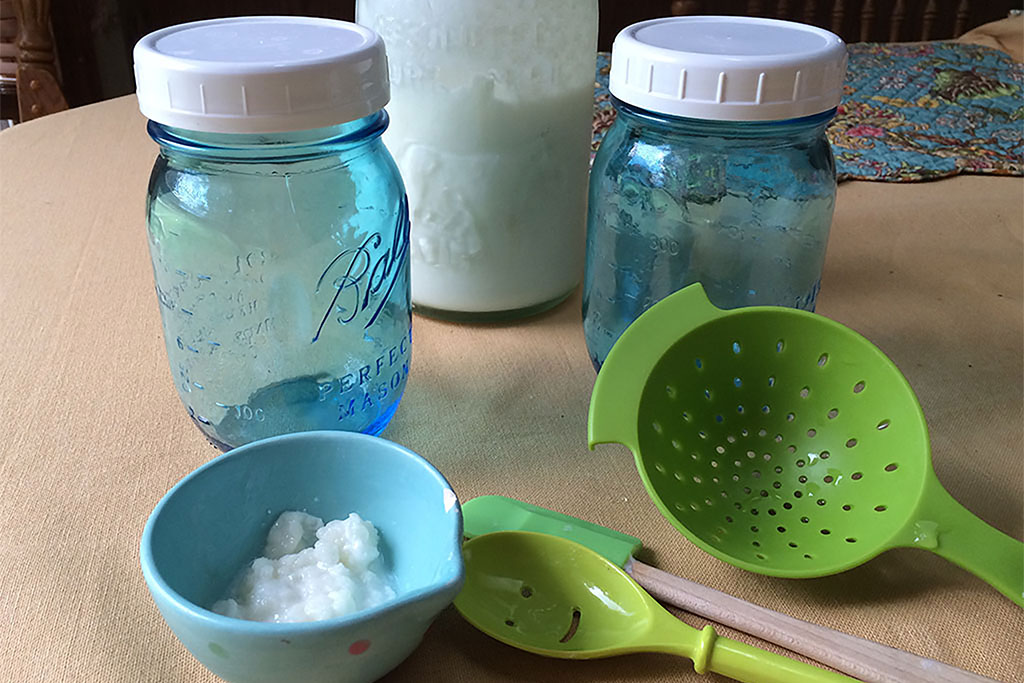
Kefir was the first cultured food I added to my life, and it is still the one I recommend most often to beginners. I have consumed it nearly every day for more than two decades, and I cannot imagine my life without it.
Kefir contains a broad community of bacteria and beneficial yeasts. The microbes ferment the milk, changing its sugars and proteins and creating a tart, creamy food that many people find easier to digest than regular milk.
Kefir played a central role in my own healing journey. With blood sugar and blood pressure problems, kefir helped me manage these issues with bioactive peptides only kefir can provide. It also helped my husband when he struggled with severe acid reflux, and it became part of the cultured-food routine that helped members of my family with difficult digestive issues. These are our personal experiences, not a promise that everyone will have the same result, but they are why I remain so passionate about teaching others to make it.
After antibiotics, kefir is often the first food I recommend. It has the most probiotics of any cultured food. If you are new to it—or your gut feels especially sensitive—start slowly. A spoonful or a small amount may be plenty at first. You can gradually increase the serving as your body adjusts.
I do not think of kefir as marching into the gut and killing everything in sight. I think of it as bringing in a strong community and helping create an environment where beneficial microbes can flourish and crowd out troublemakers.[2]
If you would like to see more reasons to consume kefir, check out this article:
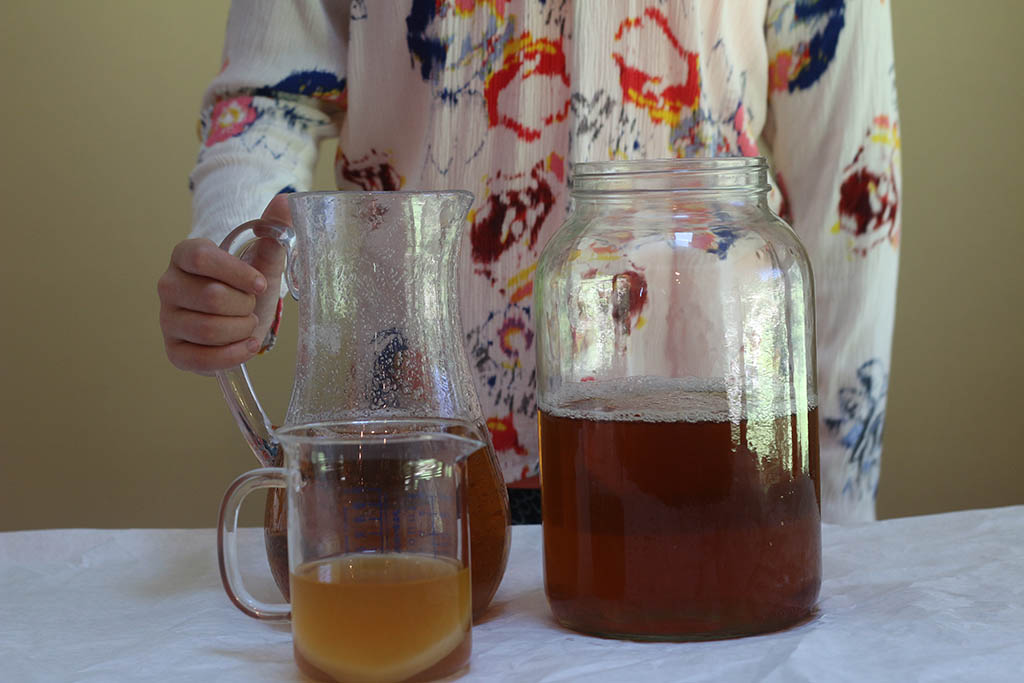
Kombucha
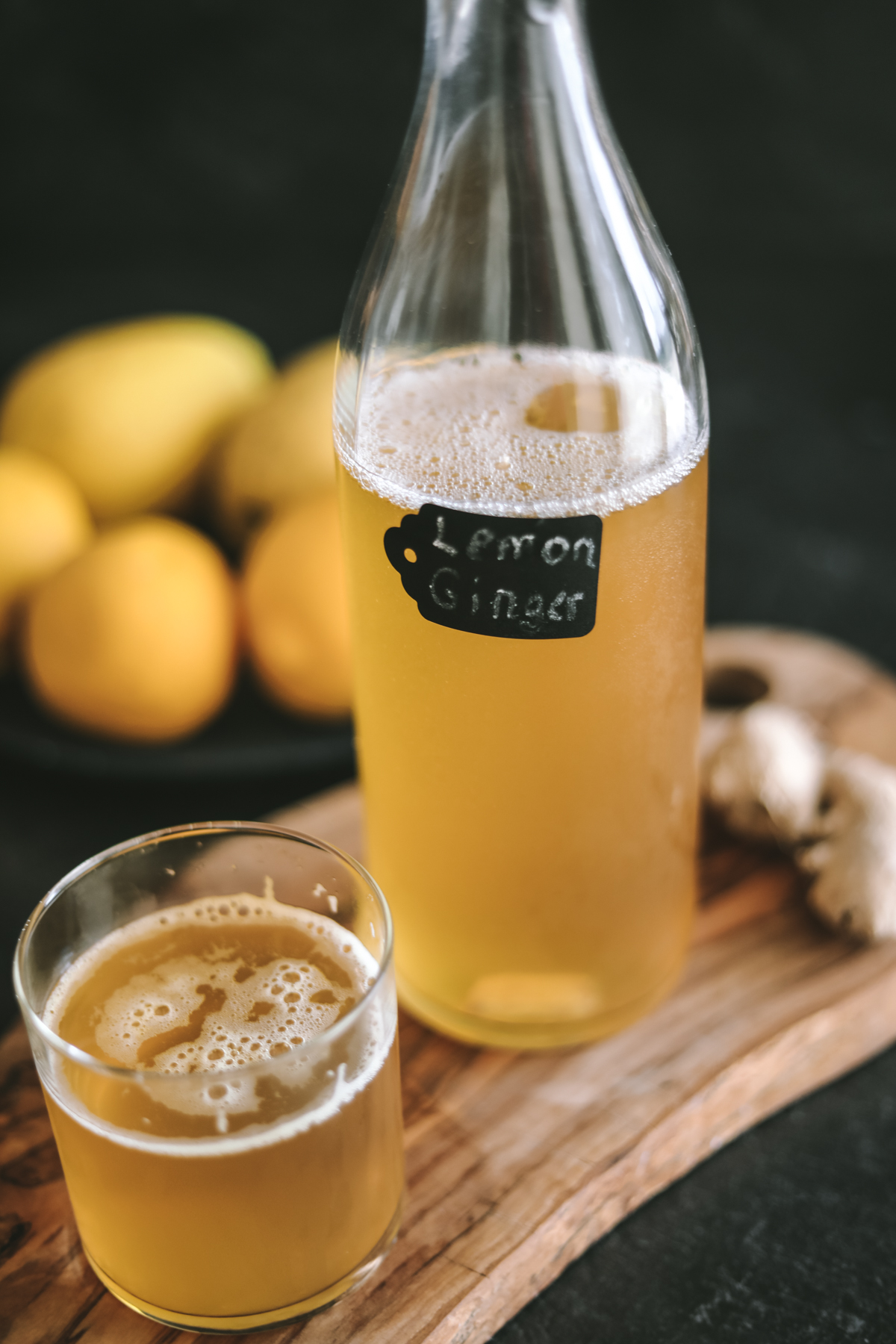
Kombucha helped me walk away from diet soda, and I have loved it ever since. It is bright, bubbly, and satisfying, but it is much more than a substitute for soda.
During fermentation, the bacteria and yeasts transform sweetened tea and create organic acids and other fermented compounds. Tea also naturally provides polyphenols—plant compounds that can interact with our gut microbes.
I enjoy a small glass with a meal. It wakes up my taste buds, supports digestion for me, and makes an ordinary meal feel special. For people who do not consume dairy, kombucha can also be one way to bring a fermented beverage into the diet.
If you are rebuilding after antibiotics, you do not need to drink an enormous bottle. More is not always better. Begin with a few ounces and see how your body responds. Choose properly fermented kombucha, and if you can make it at home, it can make a huge difference.
Check out this article:
Cultured Vegetables
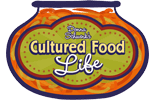
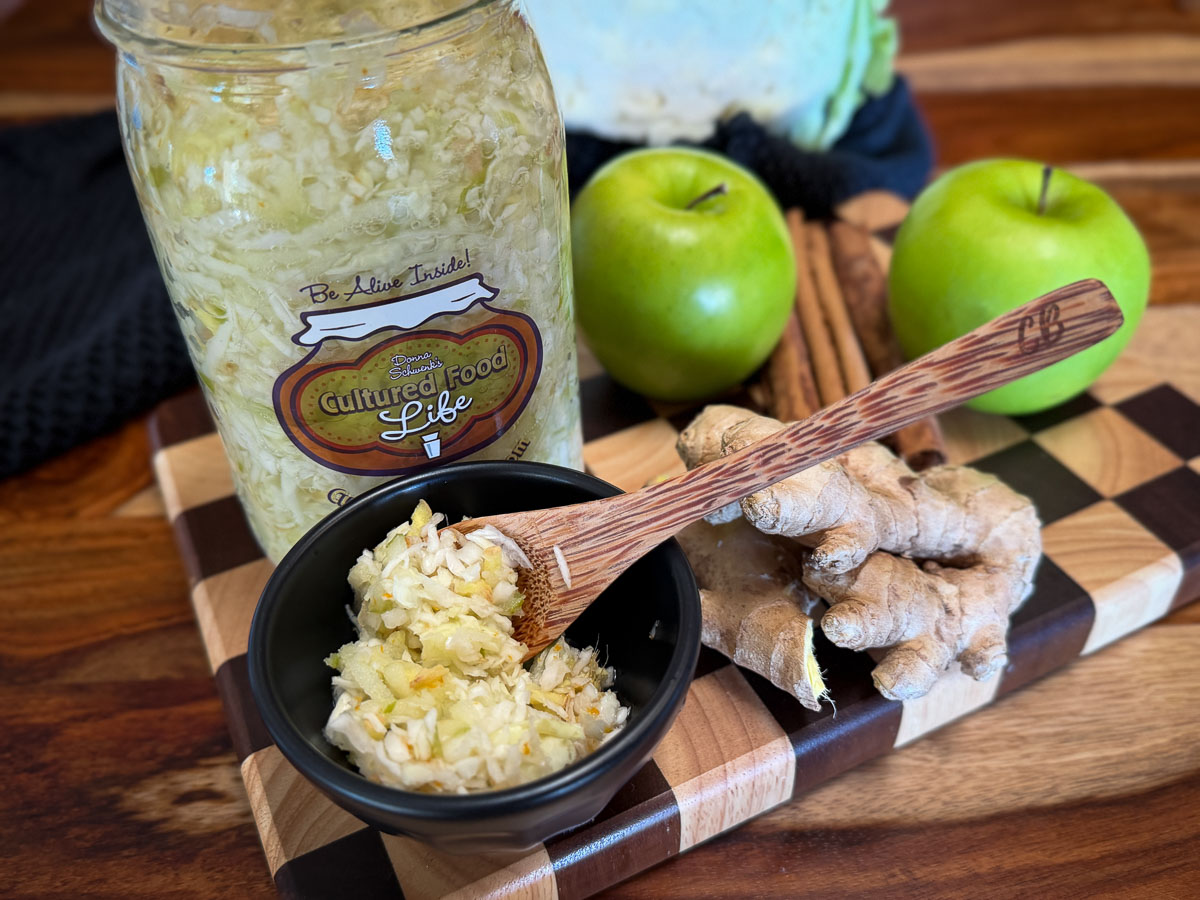
Cultured vegetables complete The Trilogy. Vegetables are already wonderful foods, but fermentation adds beneficial bacteria and produces lactic acid, which gives cultured vegetables their tangy flavor and helps preserve them.
I notice a real difference when I travel and go too long without them. My digestion becomes less comfortable, I feel bloated, and even my mood can feel off. When I bring back a spoonful of cultured vegetables with my meals, my body seems to say, “There you are!”
Cultured vegetables also bring something especially important after antibiotics: fiber from real food. Fermented foods can introduce microbes and microbial compounds, while plant fibers help nourish the wider microbial community already living in the gut. This is one reason I do not focus only on probiotic capsules. Food provides a much bigger package.
You do not need a bowlful. A forkful or large spoonful alongside a meal is a wonderful place to begin. Sauerkraut, cultured carrots, and cabbage blends are easy choices. If the vegetables are store-bought, look in the refrigerated section for raw, unpasteurized products; shelf-stable products have often been heat-treated.
Check out this article:
How I Use The Trilogy After Antibiotics
There is no single food that can instantly restore every microbe affected by an antibiotic. Microbiome recovery varies from person to person and can take time. This is why I prefer the word rebuild rather than promising a quick reset.
My approach is gentle and steady:
- Follow the antibiotic instructions from your healthcare professional. Do not stop a prescribed medicine early unless the prescriber tells you to do so.
- Begin cultured foods slowly. If your stomach is unsettled, start with one food and a very small serving.
- Build toward variety. As you tolerate them, include kefir, kombucha, and cultured vegetables rather than relying on only one fermented food.
- Feed your resident microbes too. Eat a variety of vegetables, fruits, beans, whole grains, nuts, and seeds as tolerated. These foods provide the fibers and plant compounds gut microbes use.
- Be consistent. Small servings each day are more helpful to my family than taking a huge amount once in a while.
Preparing for Cold and Flu Season
I do not wait until everyone around me is coughing to think about my gut. I begin before the season arrives.
The gut and immune system are in constant conversation. Gut microbes help interact with the intestinal barrier and immune cells, and a diverse, well-nourished microbial community supports the body’s normal defenses. This does not make fermented foods a shield against every virus. It means they can be one part of the daily habits that help us care for the whole body.
My cold-and-flu-season routine is not complicated:
- Kefir most days, often at breakfast or in a smoothie.
- A small glass of kombucha with a meal.
- A spoonful of cultured vegetables once or twice a day.
- Plenty of colorful plant foods, protein, minerals, sleep, movement, and time outdoors.
The power is in doing these simple things before you feel run down. Your body is always listening to what you do each day.
Start Where You Are
Please don't feel like you must make all three foods tomorrow. Start with one. Kefir is often my first recommendation because it is simple, versatile, and the cultured food that changed me most. Once it becomes a comfortable part of your routine, add cultured vegetables. Then learn kombucha—or choose a different order that fits your body and your life.
There is no prize for going fast. Your microbes respond to what you do repeatedly.
The Trilogy has been my secret weapon for many years. It has supported me through difficult seasons, helped my family rebuild after medications and digestive struggles, and given countless people in this community a practical way to care for their gut each day. I cannot promise that your experience will look exactly like mine, but I can tell you this: these foods are worth getting to know.
Kefir, kombucha, and cultured vegetables are simple foods made by tiny microbes, yet together they can become a beautiful daily practice. Start slowly, stay consistent, and let your body show you what it can do when it is deeply nourished.
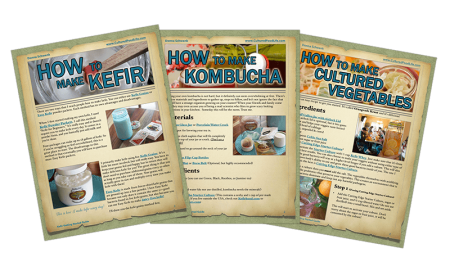
How to Make Milk Kefir
How to Make Kombucha
How to Make Cultured Veggies
Listen To My Podcast
After antibiotics—or before cold and flu season—I always come back to the same three cultured foods: kefir, kombucha, and cultured vegetables. In this episode, I’ll share why I call them The Trilogy, how each one supports the gut in a different way, and how I use them together to help rebuild, nourish, and strengthen the microbiome.
References:
- Wastyk HC, et al. “Gut-Microbiota-Targeted Diets Modulate Human Immune Status.” Cell. 2021. https://pubmed.ncbi.nlm.nih.gov/34256014/
- National Human Genome Research Institute. “Microbiome.” https://www.genome.gov/genetics-glossary/Microbiome
Are you on the list?
Sign up today and I'll send you my free Getting Started Guide!
Each week I'll send you updates, tips, recipes, and more! You might even be a winner of my weekly giveaway! (starter cultures, memberships, and more!)
Come be a part of my cultured food family!