Look for me on:



Jun! New Culture or Honey Kombucha Hybrid?
For some of you, this culture is old news . . . for others, you may have never heard of it. Jun is a cultured food similar to kombucha but supposedly its own separate thing. It is brewed with a SCOBY culture that is light in color and is made using green tea and honey. It ferments for a few days less than kombucha and has a wonderfully tangy floral taste that is lighter than traditional kombucha. There is VERY little history on Jun, unlike kombucha which can be dated back thousands and thousands of years. Jun is said to have been brought over by travelers who visited a monastery in the Himalayas and discovered this "unique" and wonderful drink. It is said to be "sacred."
According to food writer Sandor Katz, "The lack of credible information on the history of Jun leads me to the conclusion that it is a relatively recent divergence from the kombucha family tree. Some websites claim that it comes from Tibet, where it has been made for 1000 years; unfortunately, books on Tibetan food, and even a specialized book on Himalayan ferments contain no mention of it. Whether or not it has a 1,000-year-old history, it is quite delicious."
Jun Kombucha
Is Jun Really Kombucha Made With Honey?
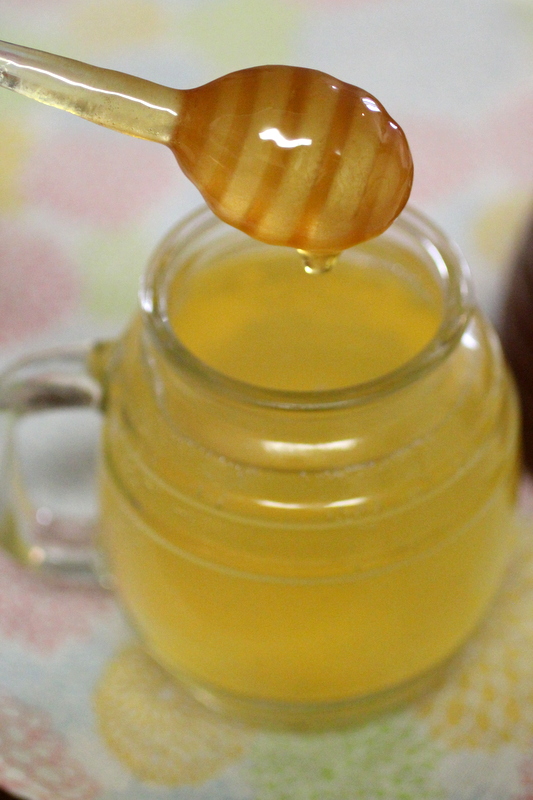 This, in our personal opinion, is more likely. In the past I have not recommended the substitution of honey (especially raw honey) in place of sugar to make kombucha (due to honey's naturally antimicrobial qualities), after MONTHS of experimenting, we have made dozen and dozens of very healthy batches of "Jun" using a kombucha SCOBY and kombucha starter tea.
In the beginning, we tried to ease the SCOBY into it using only 1/4 cup of sugar and 3/4 cup of honey and increasing it every week, but after weeks of wonderful brews we dove right in and took a brand new SCOBY and starter tea and made a batch using all honey. And voila! Success! We've repeated this process dozens of times, including using raw honey (which would no longer be raw once added to boiling or hot water) and each brew has turned out great!
Remember that honey is a prebiotic too and this feeds good bacteria and makes it grow - which is a very good thing. 
No Need For A Jun-Specific Culture
 In our opinion, there is no need for a separate Jun-specific culture. Just use a SCOBY from your kombucha and brew away!
A few notes:
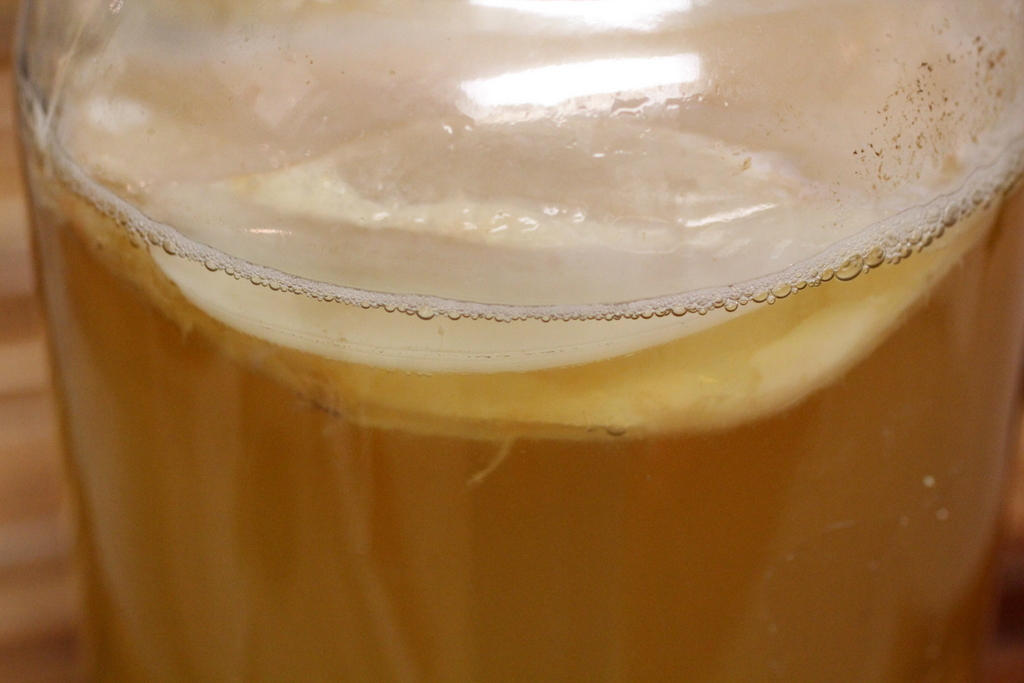
*This will produce a very light SCOBY as the ingredients you will be using are light in color and this is normal. It is said to produce better at cooler temperatures, although I haven't found this to be the case. But again, we are using a traditional kombucha SCOBY. However, I have tasted both "authentic" Jun and our own honey "Jun" Kombucha and could tell no difference.
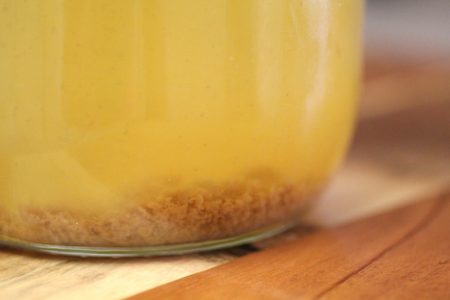
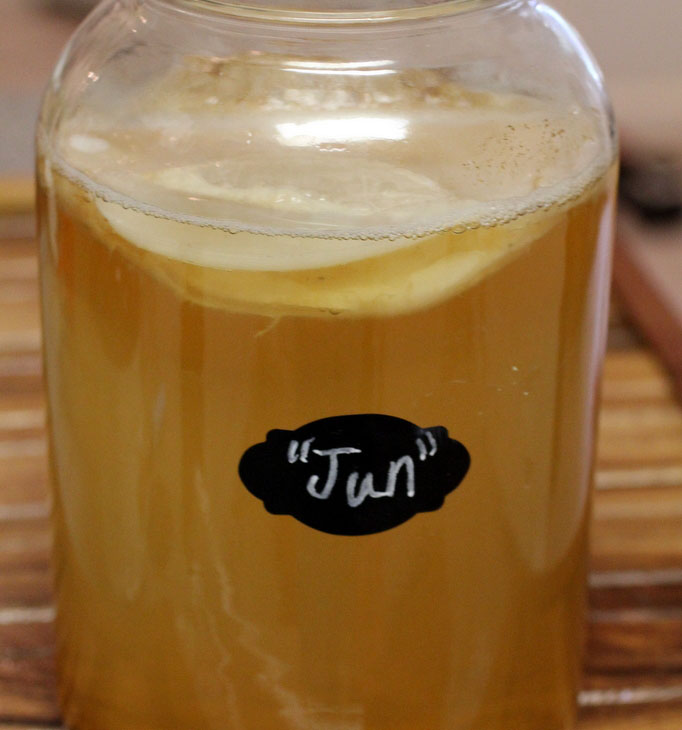
*Our Jun/honey kombucha seems to produce MORE yeast sediment than (sugar) kombucha as seen in the bottom of our brews. So don't be concerned if you notice this. It's just the process of fermentation when you're using honey.
Does Jun Have More Alcohol?
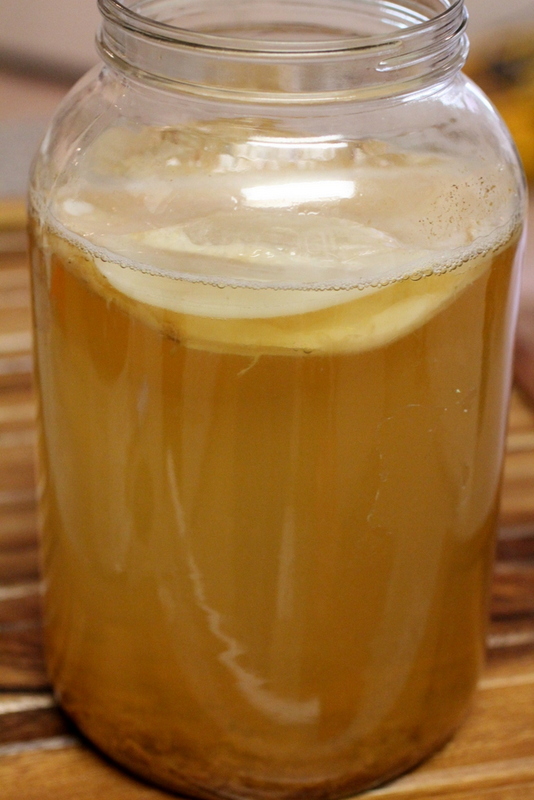 It is said that Jun can have UP TO 2% alcohol (first ferment). However, we do know a kombucha brewer who has started a wonderful kombucha bar in Tustin, California. She makes "authentic" Jun and has had it, as well as her regular kombucha, tested in a lab and hasn't seen any difference in alcohol content. She finds her Jun brews to be very, very low alcohol content, just like kombucha. But, you would have to personally test your Jun to be one hundred percent sure of the alcohol content, so keep this in mind. It may not be as friendly a ferment in this regard. Personally, we didn't notice a difference until we second fermented it. When second fermenting with Jun/honey kombucha, the alcohol content can rise if you are not careful. Do not second ferment Jun/honey kombucha that is very sweet or you will wind up with a more alcoholic beverage. Honey is highly beneficial and the flavor of the Jun/honey kombucha by itself, with no second fermenting, is carbonated and lovely and has its own unique benefits due to the benefits found in honey itself. So don't be scared!
*Always keep an extra kombucha SCOBY and starter on hand in case you need a backup.
Whether you believe in the mythical tales of the sacred Jun culture or lean more to the Kombucha hybrid side, it is nice to know you can use honey when making kombucha and not worry about harming your brew.
Check out the recipe below if you want to try some Jun.
Jun Kombucha

Ingredients
- 1 cup Honey
- 1 cup kombucha starter - This will have a kombucha scoby and 1 cup of already made kombucha tea.
- 12 cups filtered or spring water with minerals
- 3-5 green tea bags
Every ingredient with a link was selected by me to make it easier for you. I may receive a small affiliate commission if you buy something through my links. Thank you! ❤️
Instructions
- Bring 12 cups of water to a boil.
- Add honey and dissolve.
- Add tea bags to water and honey.
- Turn off heat and let brew for at least 5-10 minutes.
- Strain your tea, if necessary, into your brewing vessel. Let cool.
- Once completely cool, add your kombucha starter liquid and SCOBY.
- Cover with a thin cloth or a towel and rubber band to secure.
- Brew on countertop from 6-14 days. Houses warmer than 70 degrees will take less time than cooler houses.
- When your Jun Honey Kombucha is to your taste, you can drink right away or store in bottles in the fridge.
- Reserve 1 cup of starter liquid to use with your next brew.

Notes

Listen To My Podcast
Jun is a cultured food similar to kombucha but supposedly its own separate thing. It is brewed with a SCOBY culture that is light in color and is made using green tea and honey. It ferments for a few days less than kombucha and has a wonderfully tangy floral taste that is lighter than traditional kombucha. There is a little confusion about where it came from and how to make it, so listen to today's podcast to learn more.
References I talked about:
Are you on the list?
Sign up today and I'll send you my free Getting Started Guide!
Each week I'll send you updates, tips, recipes, and more! You might even be a winner of my weekly giveaway! (starter cultures, memberships, and more!)
Come be a part of my cultured food family!