Look for me on:



Orangeade Kraut: A Fermented Food That Feeds Your Gut and Supports Your Cells
Healing the gut and Cells
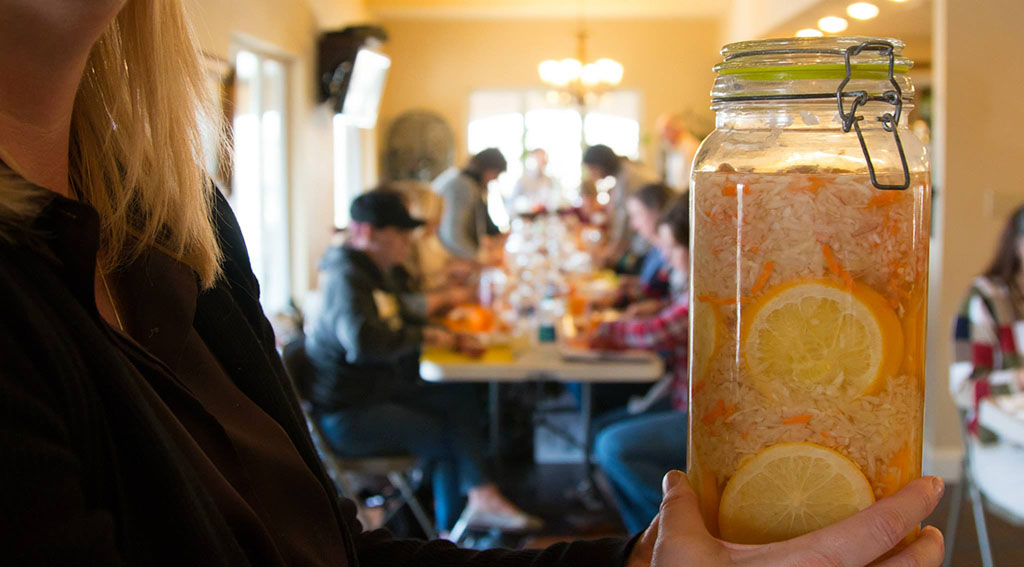
There are some recipes that are just good… and then there are the ones that quietly change things inside your body in ways you can’t see—but can definitely feel.
Why Add Oranges and Apples?
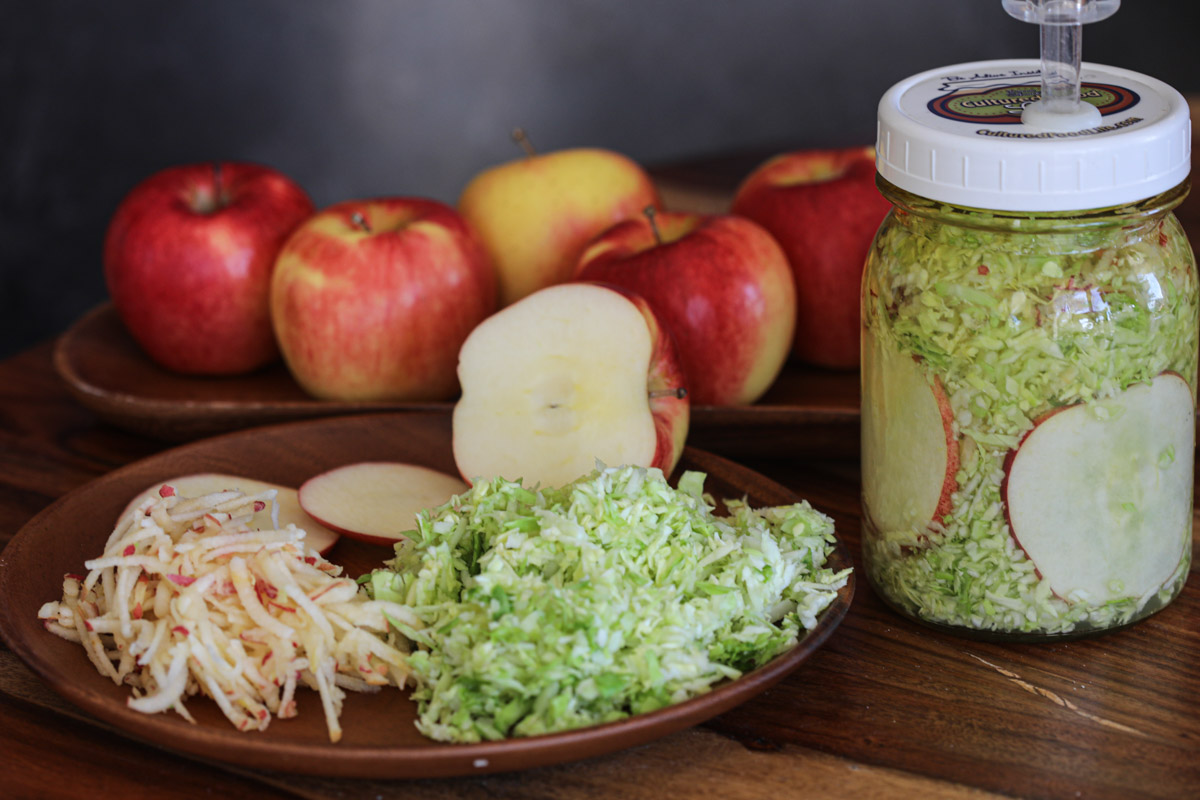 Now let’s talk about what makes this version so special—and why I teach it in my classes.
🔬 The Breast Cancer Research
One of the most fascinating areas of research around cabbage and sauerkraut is how it may support cellular health.
Studies have shown that higher intake of cabbage and sauerkraut is linked to significantly lower breast cancer risk, with some data suggesting over a 70% reduction in risk in those who consume the most compared to those who consume the least.
In 2005, a team of researchers from Poland and the United States observed a higher rate of breast cancer among Polish women who immigrated to the United States. They found the Polish women who moved here from Poland had been used to eating thirty pounds of fermented sauerkraut each year, but once they moved to the U.S. they averaged only ten pounds a year. [6]Why does this matter?
Dorothy Rybaczyk-Pathak from the University of New Mexico studied these effects and found that sauerkraut contains high levels of glucosinolates. Glucosinolates have been shown to have anti-cancer activity in laboratory research. “The observed pattern of risk reduction indicates that the breakdown products of glucosinolates in cabbage may affect both the initiation phase of carcinogenesis – by decreasing the amount of DNA damage and cell mutation – and the promotion phase, by blocking the processes that inhibit programmed cell death and stimulate unregulated cell growth,” said Dorothy Rybaczyk-Pathak.[7]
Another study, published in 2012 in the journal Nutrition Cancer, also shows that consuming fermented sauerkraut is connected with a reduction in breast cancers. Their research supported the effect of cabbage and sauerkraut juices on key enzymes involved in estrogen metabolism. There are also three more studies showing various health benefits of eating fermented sauerkraut and how it can be part of a natural treatment program for certain cancers. [8,9,10]
Now, this doesn’t mean sauerkraut is a treatment—but it does show just how powerful these foods can be.
So what’s happening?
Cabbage contains natural compounds called glucosinolates.
When cabbage is chopped—and especially when it’s fermented—these compounds are converted into bioactive compounds like:
- Indoles
- Isothiocyanates
These compounds have been studied for their ability to:
- Support the body’s natural detox pathways
- Help regulate estrogen activity
- Protect cells from damage
👉 Fermentation helps unlock these compounds in a way your body can actually use.
These same compounds have also been linked to:
- Reduced DNA damage and cell mutation
- Protective, anti-inflammatory effects in the body [11,12]
This is one of the reasons fermented cruciferous vegetables like sauerkraut are so powerful—they don’t just nourish you, they actively support your body’s ability to protect and repair itself.
Get the Recipe
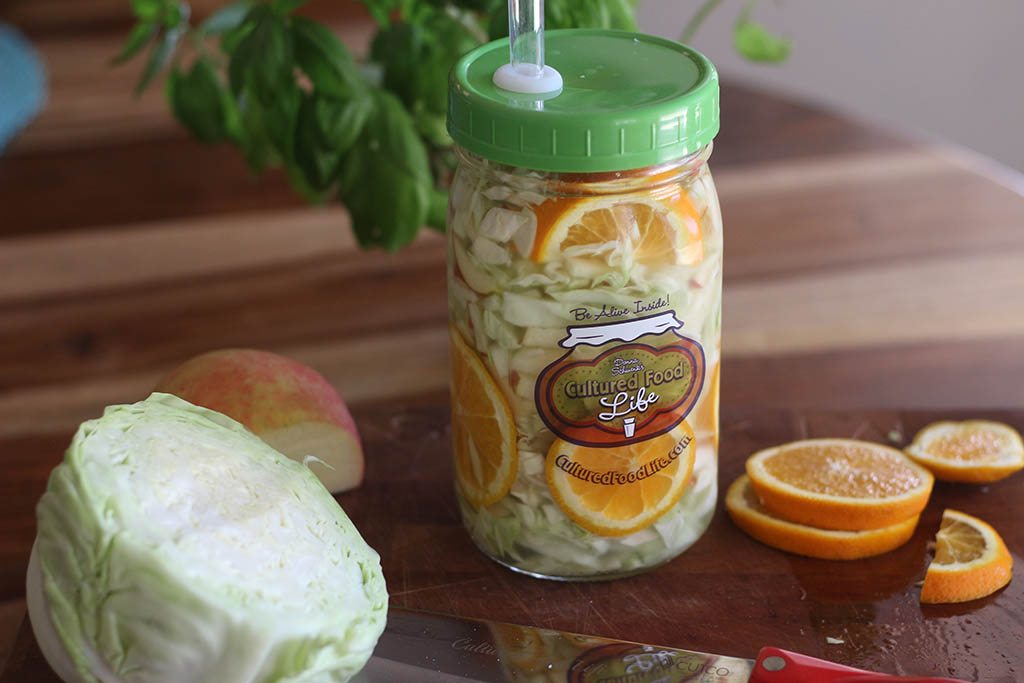
Orangeade Kraut

Watch The Video
Ingredients
- 1 small head green cabbage - about 1 pound
- 1 apple - unpeeled and cored
- 1 orange
- ½ tablespoon Celtic Sea Salt
- ¼ teaspoon Veggie Starter Culture - or ¼ cup Kefir Whey
Every ingredient with a link was selected by me to make it easier for you. I may receive a small affiliate commission if you buy something through my links. Thank you! ❤️
Instructions
- If using the starter culture, stir together the culture and water. Let the mixture sit while you prepare the ingredients—around 10 minutes. If using kefir whey, add it when the recipe calls for culture.
- Remove outer leaves of cabbage.
- Finely shred cabbage and apple. You can use a food processor or a hand shredder.
- Add salt to cabbage and apples.
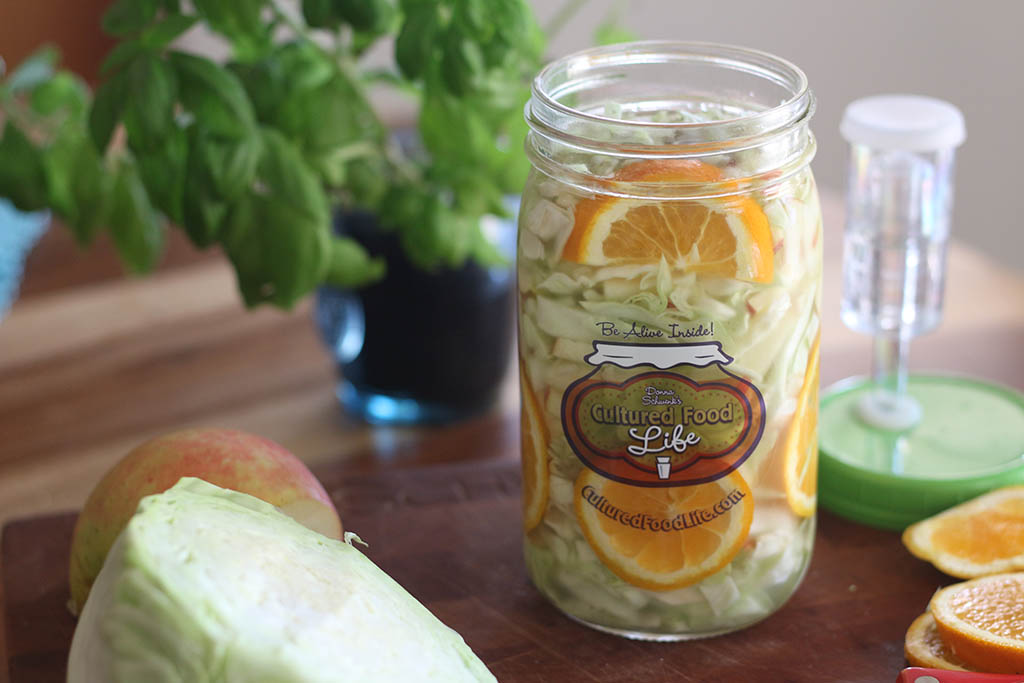
- Slice orange in thin pieces and place around the outside of the jar or you can just layer them in the jar anywhere.
- Pack cabbage and apples into the jar.
- If using a culture, add the Cutting Edge Culture, or kefir whey, to the jar.
- Cover with water. Leave 2 to 3 inches in the jar for the kraut to expand. Place a lid on the jar and set in a cool place, out of sunlight for 6 days.
- It will expand and bubble. That is the fermentation and lactic acid developing. If the vegetables climb above the water, open the jar and push down the vegetables under the water and seal the jar again. When exposed to air, the cabbage will mold if left like that for a while. It won’t hurt anything if it happens, just scoop out the vegetables above the water and push the other ones down below the water. After 6 days, place in the refrigerator.
- They will last at least 9 months or longer in your fridge.

Listen To My Podcast
Orangeade Kraut might look simple, but this fermented food is doing so much more than adding flavor to your plate. In this podcast, I’m sharing why this is the exact recipe I teach in my classes and the fascinating science behind fermented cabbage, oranges, and apples. How it can help with gut health and so much more. Tune in to learn more.
References I talked about:
References:
-
- https://journals.asm.org/doi/10.1128/aem.02234-24
- https://pmc.ncbi.nlm.nih.gov/articles/PMC9003261/
- Fermented Foods, Inflammation, and Cellular Protection
- https://pmc.ncbi.nlm.nih.gov/articles/PMC4268643/
- https://nutraceuticalbusinessreview.com/uc-davis-sauerkraut-fermented-cabbage-gut-health-study?
- https://pmc.ncbi.nlm.nih.gov/articles/PMC8535652/
- https://www.foodnavigator.com/Article/2005/11/04/Sauerkraut-consumption-may-fight-off-breast-cancer/
- http://www.ncbi.nlm.nih.gov/pubmed/22716309.
- https://www.ncbi.nlm.nih.gov/pubmed/22173777
- https://www.ncbi.nlm.nih.gov/pubmed/23090135
- L.G. van der Flier and H. Clevers, “Stem Cells, Self Renewal, and Differentiation in the Intestinal Epithelium,” Annual Review of Physiology 71, (2009): 241-60: abstract at science.naturalnews.com/2009/2043215_Stem_cells_self_renewal_and_differentiation_in_the_intestinal_epithelium.html;
- L. Bailey, “Gut Reaction: Mice Survive Lethal Doses of Chemotherapy,” Michigan News (July 31, 2013): https://news.umich.edu/gut-reaction-mice-survive-lethal-doses-of-chemotherapy/
Are you on the list?
Sign up today and I'll send you my free Getting Started Guide!
Each week I'll send you updates, tips, recipes, and more! You might even be a winner of my weekly giveaway! (starter cultures, memberships, and more!)
Come be a part of my cultured food family!