Look for me on:



How to Start Healing Your Gut: Which Fermented Food Is Best for You?
Where do I start?
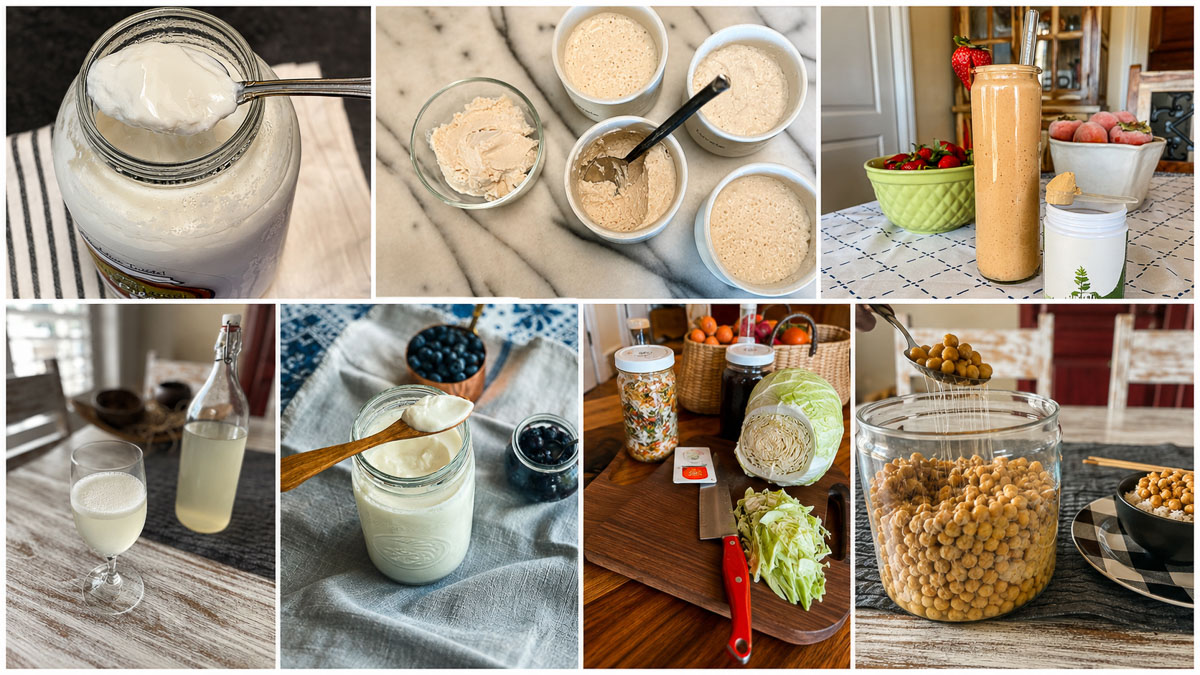 One of the questions I hear more than almost any other is, “Where do I start?”
Maybe your digestion is a mess. Maybe you've been on antibiotics. Maybe you're struggling with bloating, Candida, SIBO, inflammation, or you simply don't feel like your gut is working the way it should.
People often ask me for the one fermented food they should eat.
But after all these years of working with cultured foods, I've learned something important:
There isn't one fermented food that is best for everybody.
Different fermented foods contain different bacteria, yeasts, enzymes, acids, and compounds. And sometimes the thing you need most isn't another probiotic at all — it's the food that helps the good bacteria already living inside you grow.
Your microbiome is an ecosystem.
When you understand a little about the organisms living there, you can begin choosing foods that support what your body needs most.
And this is where things get really exciting.
1. If You Want to Rebuild and Diversify Your Gut: Start With Kefir
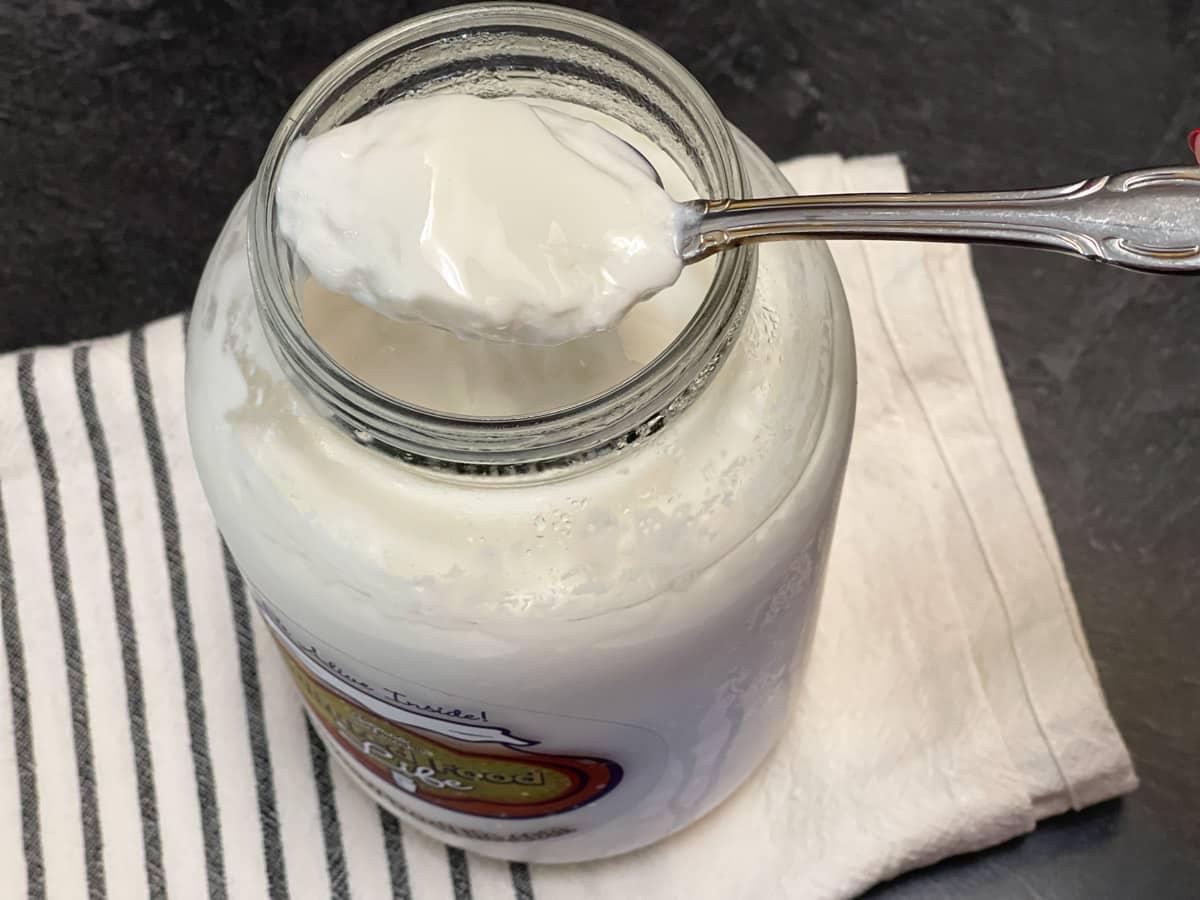 If somebody came to me and said, "My gut is a mess, and I don't know where to begin," kefir would usually be the first cultured food I would think about.
Kefir isn't just one probiotic organism. It is a community of bacteria and beneficial yeasts living together. Over 50+ probiotic bacteria and good yeasts. That's one of the things that makes kefir so different from conventional yogurt or a probiotic capsule containing only a few strains that often gets killed by the stomach acids. Kefir speeds to the parts of the body it belongs, and food gives it a protective halo.
For me, kefir has always been the great rebalancer. The organisms in kefir ferment the milk, produce organic acids, bioactive peptides, and other compounds, and then enter your digestive tract as an entire little ecosystem. And there is something very important that happens when you continually bring in beneficial microbes:
They take up space: They compete for food and places to live. They produce acids and other compounds that can make the environment less friendly for undesirable organisms. This is sometimes called competitive exclusion, but I like to describe it much more simply: The good guys crowd out the bad guys.
That doesn't mean kefir is a treatment for every digestive disease. But if your goal is to begin building a healthier microbial ecosystem, kefir is one of my favorite places to begin. You don't have to start with a huge amount either.
If your gut has been very sensitive, start slowly. A few spoonfuls may be enough at first. Then let your own body tell you how quickly to increase it.
I've learned over and over again that more isn't always better. Consistency is better.
2. If You Have SIBO or Problems in the Upper Gut: Look at L. reuteri and L. gasseri
 Sometimes the problem isn't simply that you need more bacteria. It is that microbes are living where they shouldn't be.
SIBO stands for small intestinal bacterial overgrowth. Most of the enormous population of microbes in your digestive tract belongs farther down in the colon. When excessive numbers of certain bacteria begin inhabiting the small intestine, people can experience bloating, gas, discomfort, changes in bowel movements, and food intolerances.
This is where I became especially interested in L. reuteri and L. gasseri.
These organisms are interesting because they are associated with the upper gastrointestinal tract, and both can produce substances called bacteriocins that inhibit competing microorganisms.
L. reuteri can also produce reuterin, an antimicrobial compound that helps it compete with other microbes.
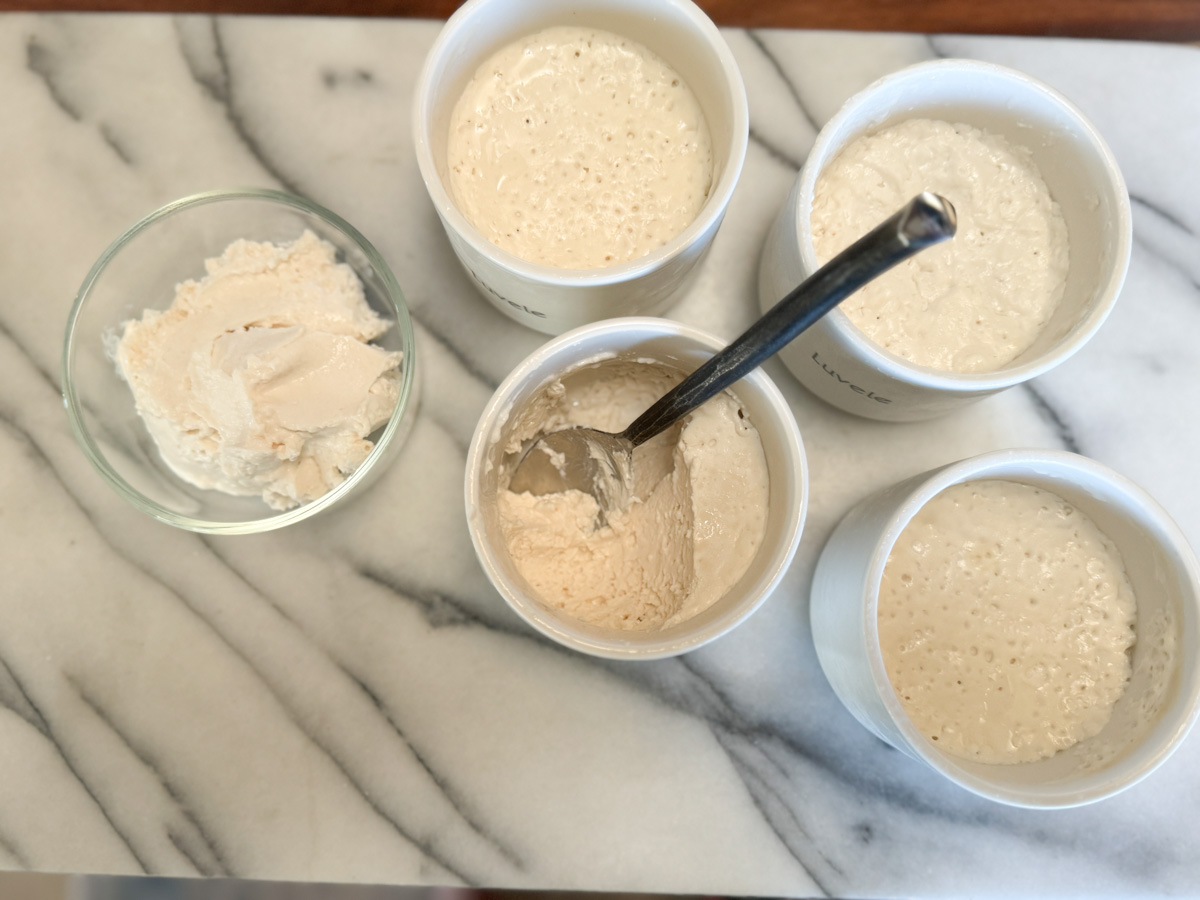
This is why I make my L. reuteri yogurt differently from regular yogurt. It ferments for about 36 hours at roughly 100°F, along with a prebiotic that gives the organisms plenty of food.
I also make L. gasseri separately. I don't ferment the two cultures together because one organism may dominate the other. Once they're cultured, you can certainly eat them together.
I've heard from many people who have found these specialty yogurts helpful while working on SIBO, but SIBO can have several underlying causes and sometimes requires medical treatment too. I think of these cultured foods as a way to support a healthier ecosystem in the upper gut, rather than simply trying to sterilize it.
This is an important shift in thinking. We don't want an empty gut. We want the right microbes in the right places.
3. If Candida Seems to Be Taking Over: S. boulardii
 One of the biggest misunderstandings I see is the belief that if you have Candida, you need to avoid every fermented food because fermented foods contain yeasts. But not all yeasts behave the same way.
Saccharomyces boulardii is a beneficial probiotic yeast, and it has been studied extensively for gastrointestinal health.
This is especially fascinating because bacteria aren't the only organisms that help maintain balance in your gut. Beneficial yeasts have a role too.
S. boulardii can compete with other microorganisms as it travels through the intestinal tract. Research has also found benefits from certain strains of S. boulardii in reducing the risk of antibiotic-associated diarrhea.
There is also laboratory and clinical research exploring its interaction with Candida and other undesirable organisms.
I think of S. boulardii almost like a temporary visitor who comes through your intestinal tract and helps restore order.
It doesn't permanently colonize your gut. It moves through, does its job, and eventually leaves.
That's one reason it can be particularly useful after antibiotics, when the bacterial population has been disturbed and Candida may suddenly have more room to expand.
This is another example of why I don't like the idea of simply "killing Candida."
Candida normally exists in small amounts in the human body.
The goal is balance.
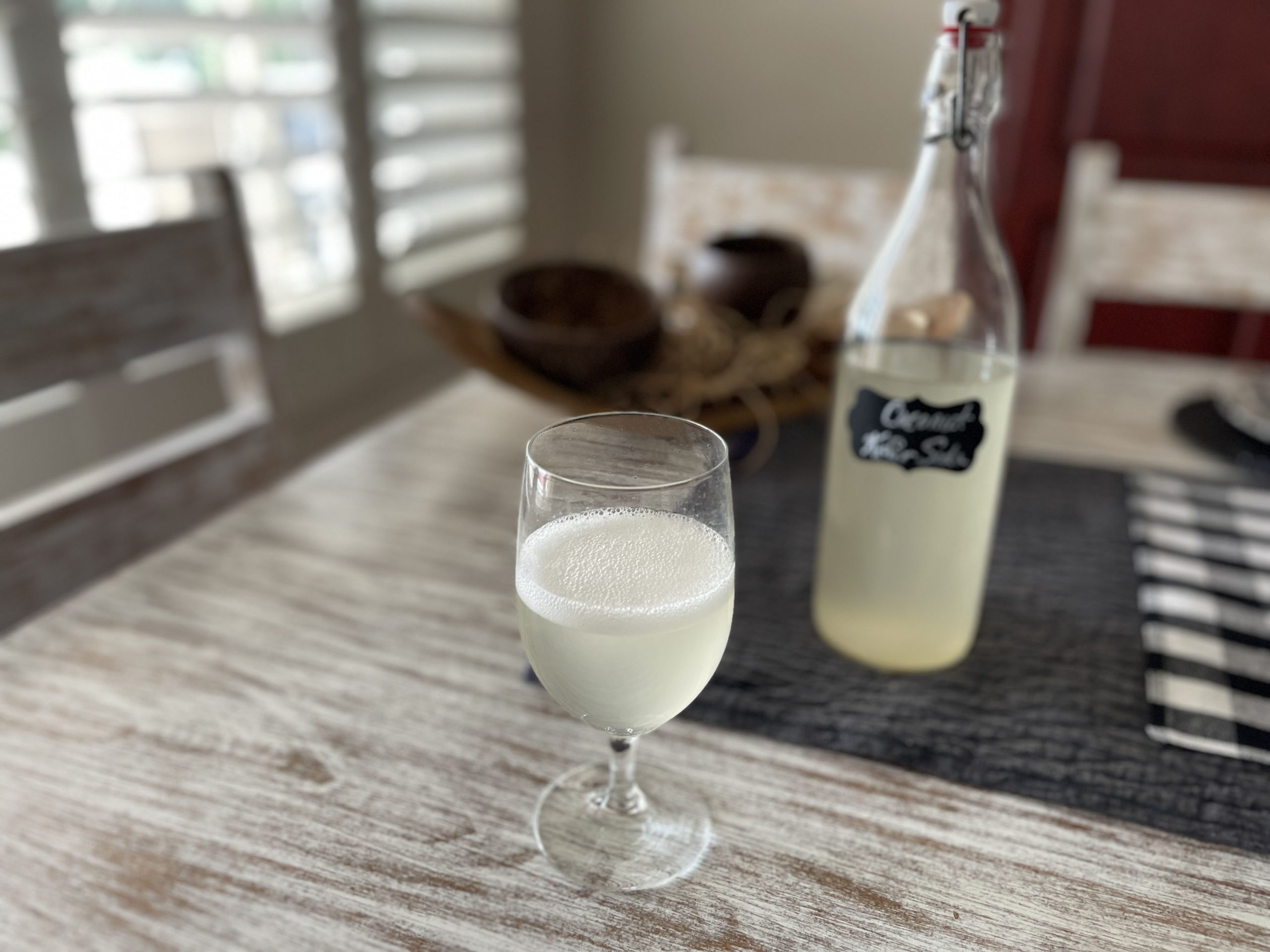
Bring back the organisms that keep everything in its proper place. Coconut kefir soda is loaded with S boulardii, and fermenting it with coconut water, which is also antifungal, is a great place to start.
4. After Antibiotics: Don't Forget S. boulardii and Bifidobacteria
 Antibiotics can be lifesaving, and sometimes you absolutely need them.
But antibiotics don't walk through your gut asking which bacteria are your friends before they start working.
Beneficial microbes can be affected too.
This can leave open niches in your intestinal ecosystem, and it is one reason antibiotic-associated diarrhea and other digestive changes can occur.
S. boulardii is particularly interesting during antibiotic use because it is a yeast rather than a bacterium, so antibacterial medications don't affect it in the same way they affect probiotic bacteria.
Then I would begin thinking about rebuilding the bacteria that may have been depleted — especially Bifidobacteria
5. If You Want to Build Bifidobacteria and Support Immunity: HMOs
 Bifidobacteria are some of my favorite organisms in the microbiome.
They are among the first important organisms that populate the infant gut, and although their numbers often decline as we age, they remain tremendously important throughout life.
They help ferment dietary fibers and produce compounds that influence other organisms in the microbiome.
And here's the important part:
Sometimes adding bacteria isn't enough. You have to feed them.
This is where human milk oligosaccharides, or HMOs, become fascinating.
Despite the name, supplemental HMOs aren't human milk. Certain HMOs can be produced through fermentation and used as highly selective prebiotic carbohydrates.
Bifidobacteria love them.
Research in adults has shown that HMOs can substantially alter the microbiome and increase populations of Bifidobacterium. In one human study involving healthy adults, an HMO mixture produced a dose-dependent increase in Bifidobacterium.
Other experimental work has found that fermentation of specific HMOs increases Bifidobacteria and short-chain fatty acids and may influence intestinal barrier function.
This is why I became so interested in HMOs.
You can introduce beneficial organisms, but then you need to set the table for them.
Give them the foods they prefer and they multiply.
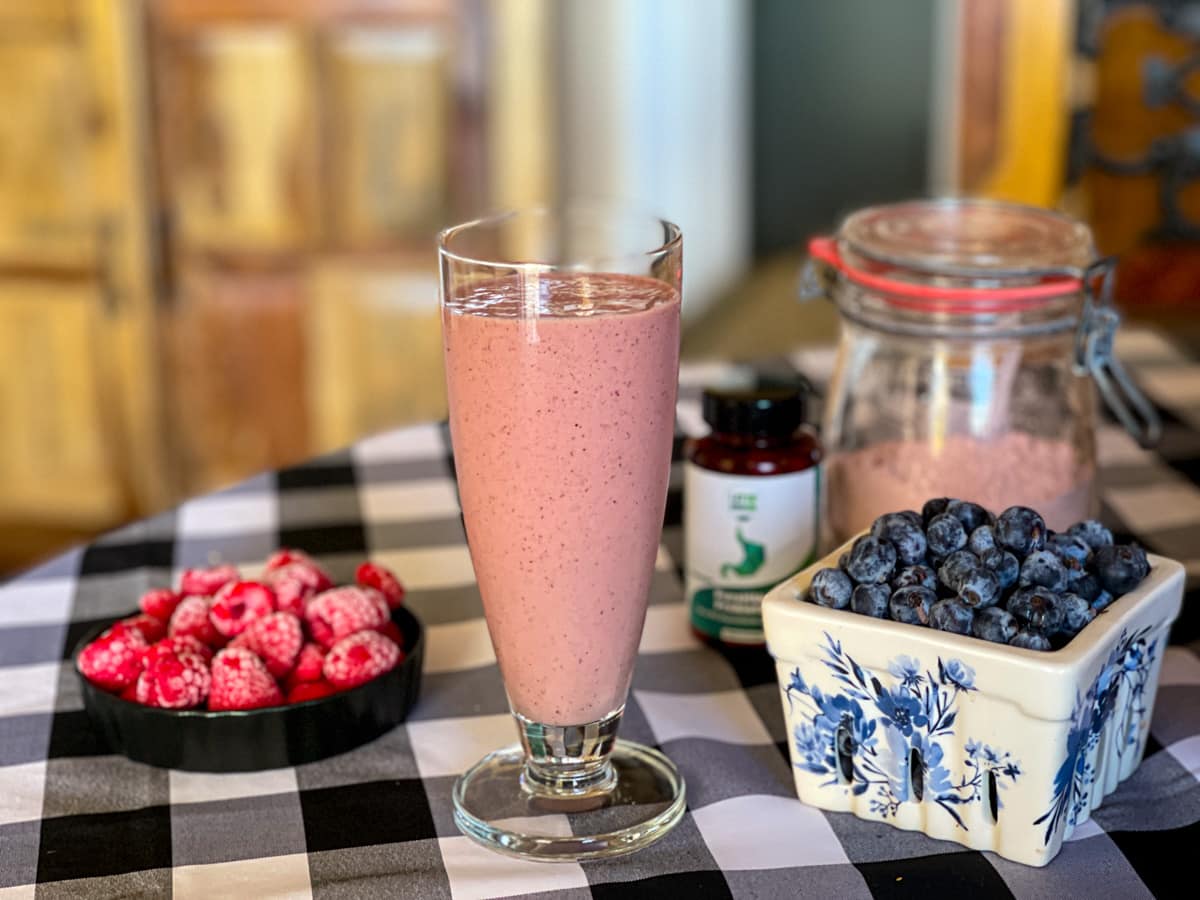
When I use HMOs, I like to start slowly. I often add them to a kefir smoothie with berries and other fibers.
You don't have to throw everything at your microbiome at once.
Feed it gently and consistently.
6. If You Want to Strengthen the Gut Environment: Feed Akkermansia
Another organism I pay a lot of attention to is Akkermansia muciniphila.
Akkermansia lives close to the mucus layer that protects the intestinal wall, which is one reason researchers have become so interested in its relationship with metabolic health and gut-barrier function.
But again, my first question isn't always:
"What probiotic food can I take?"
Sometimes my question is:
"What can I eat that makes the microbes I want grow?"
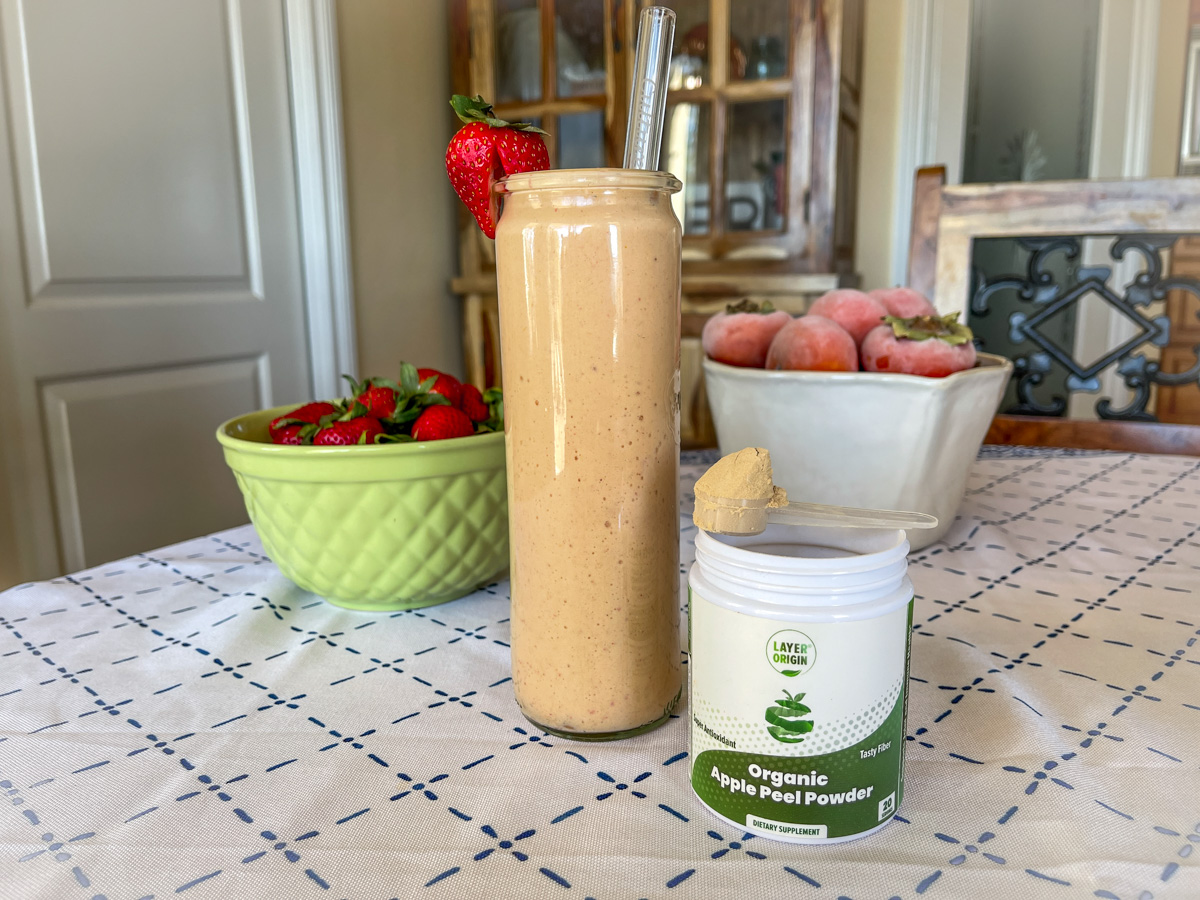
One wonderfully simple answer is apple peels.
Apple peels contain fiber and an impressive collection of polyphenols. These compounds aren't simply nutrients for us. Many reach our intestinal microbes and become part of the conversation occurring between food and the microbiome.
Studies of apple peel and apple polyphenols have found changes in gut microbial communities, short-chain fatty-acid production, and intestinal-barrier markers. Some animal and laboratory studies have also reported increases in Akkermansia.
Apple peel fermentation has also been shown experimentally to increase Bifidobacterium and short-chain fatty-acid production.
I love this because it shows you just how powerful everyday food can be.
- An apple with the peel.
- Berries.
- Vegetables.
- Polyphenol-rich foods.
- Prebiotic fibers.
These aren't side dishes in gut healing.They feed the very organisms you're trying so hard to restore.
7. If You Have Stomach Distress of Any Kind: Cultured Vegetables + L. plantarum
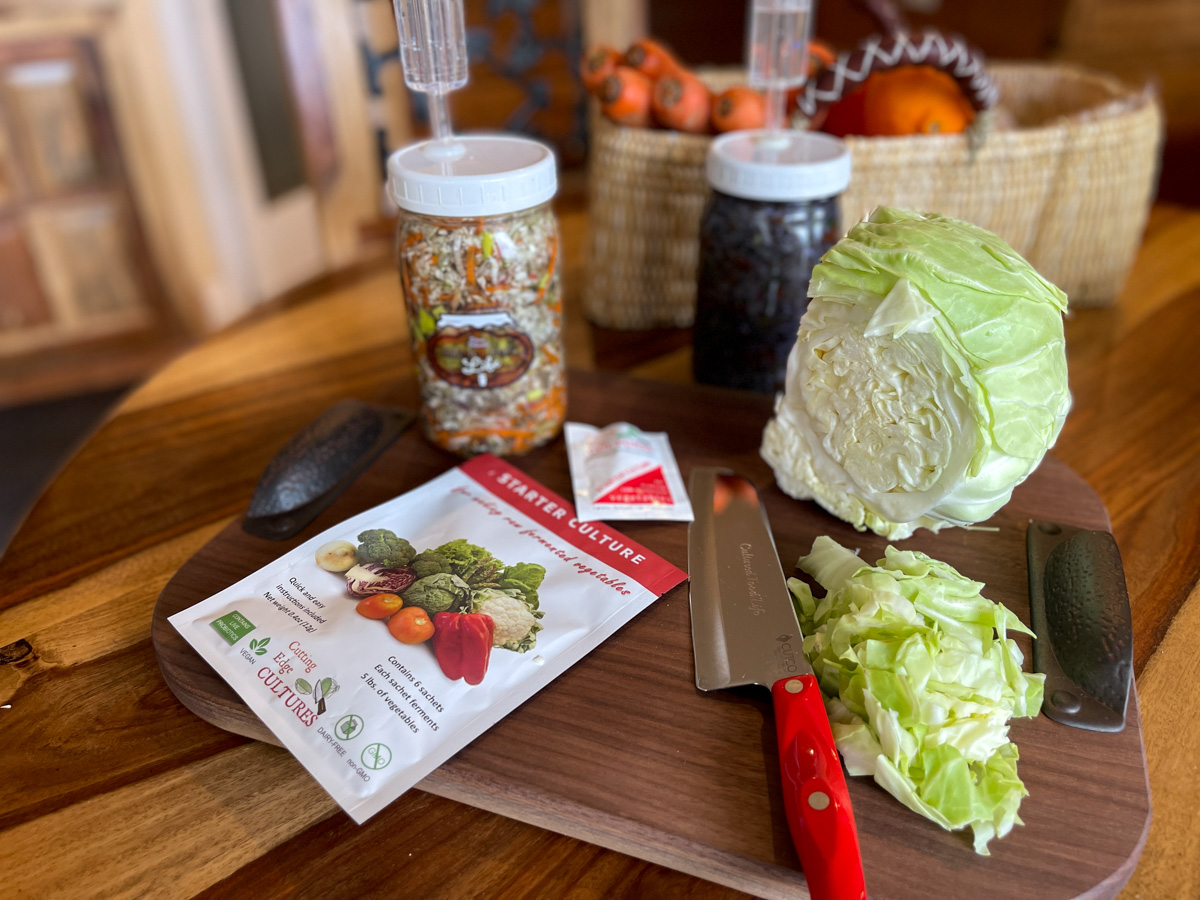
If my stomach is upset, cultured vegetables are one of the first foods I reach for. The superstar microbe I especially love in cultured vegetables is Lactiplantibacillus plantarum, formerly known as Lactobacillus plantarum.
This is one tough little bacterium.
L. plantarum is well adapted to survive the acidic environment of the stomach and travel through the digestive tract. It also produces lactic acid and other compounds that help it compete with undesirable bacteria.
But what convinced me years ago wasn't just the research. It was what I saw happen in my own life. I've reached for cultured vegetables when there was nausea, stomach cramping, digestive upset, or that unmistakable feeling that something I ate just wasn't right.
Sometimes I don't even eat a full serving. I'll take a spoonful of the cultured vegetable brine or a small forkful of the vegetables and see how my body responds.
Cultured vegetables also give you something that a probiotic capsule can't: the fermented vegetable itself. You're getting beneficial microbes along with plant fibers and fermentation compounds that help support the larger microbial community in your gut.
Another thing I love about cultured vegetables is how practical they are. Once they're fermented and stored in the refrigerator, they can last for up to 9 months, so it's easy to keep several jars on hand and have them ready whenever you need them.
And because L. plantarum is generally considered a transient organism rather than something that permanently takes up residence, I like having cultured vegetables regularly instead of thinking of them as a one-time fix.
So when somebody tells me:
"My stomach just doesn't feel right."
Cultured vegetables are one of the first things that come to mind.
They've earned a permanent place in my refrigerator.
8. If Cardiovascular Health Is on Your Mind: Natto
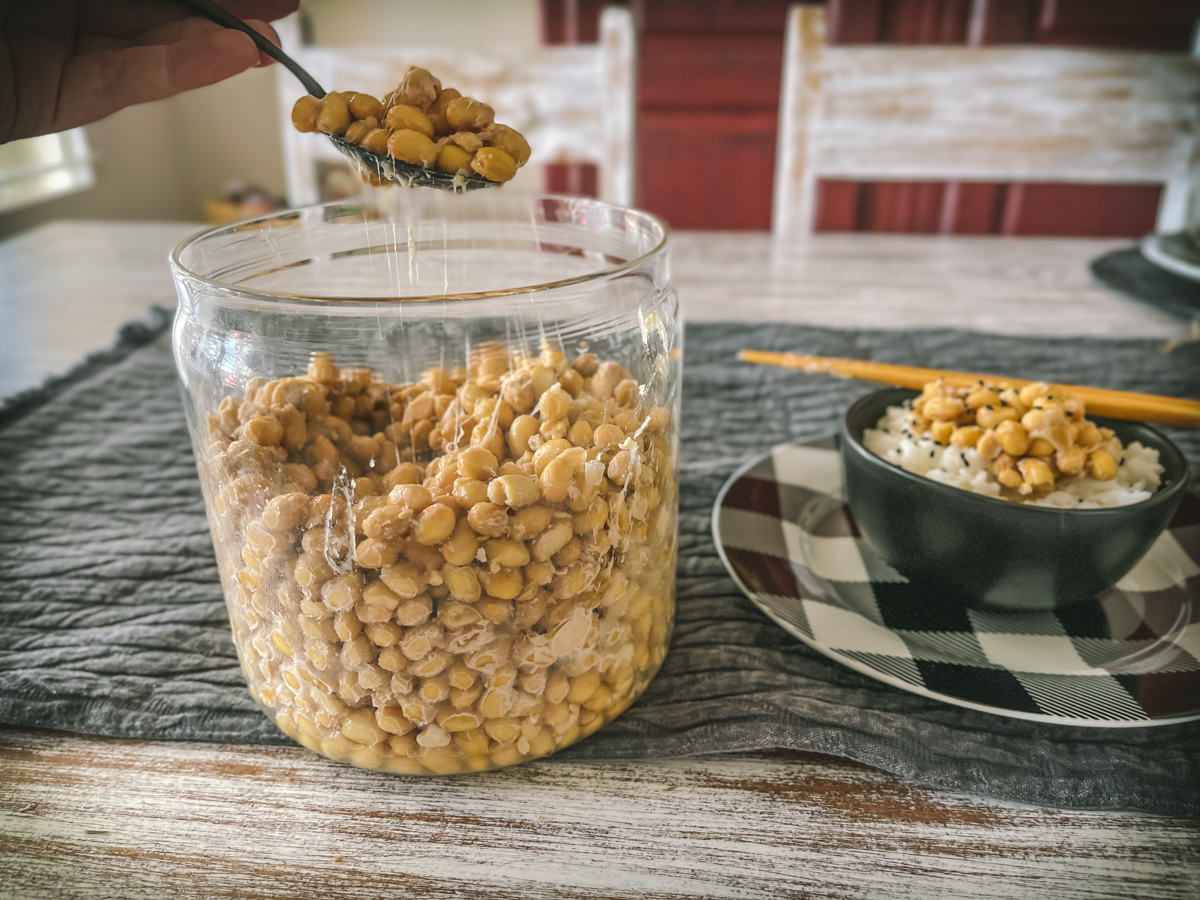 Natto is very different from kefir, yogurt, kombucha, and cultured vegetables.
Natto is fermented soybeans traditionally eaten in Japan and fermented by Bacillus subtilis.
One reason natto has fascinated researchers is an enzyme produced during fermentation called nattokinase.
Natto is also one of the richest dietary sources of vitamin K2, particularly MK-7.
Nattokinase has been studied for its fibrinolytic activity — its ability to affect proteins involved in blood clotting and breakdown.
And then researchers found something that caught my attention.
Laboratory research showed that nattokinase could degrade the SARS-CoV-2 spike protein under experimental conditions.
It is an intriguing area of research and another example of just how many biologically active compounds can be created through fermentation.
For me, natto belongs in an entirely different category from something like kefir.
I don't necessarily think of it as the first food for rebuilding a damaged microbiome.
I think of natto more as a specialty ferment with unique cardiovascular, K2, and enzymatic properties.
You Don't Need All of These at Once
This might be the most important thing I tell you. Please don't read this article and think:
"Now I need kefir, L. reuteri yogurt, L. gasseri yogurt, S. boulardii, HMOs, apple peel powder, cultured vegetables, and natto tomorrow morning."
No! Your microbiome doesn't need to be attacked with health. It needs to be nurtured.
Pick the place that sounds most like you.
- If you're simply trying to rebuild: Start with kefir.
- If you've had antibiotics, consider S. boulardii, kefir, Bifidobacteria, and the fibers that feed them.
- If Bifidobacteria are what you want to build: Consider HMOs along with berries, kefir, and fiber-rich foods.
- If you're dealing with upper-gut problems such as SIBO: Learn more about L. reuteri and L. gasseri.
- If Candida has become troublesome: Think about restoring bacterial and yeast balance rather than trying to destroy every yeast in your body.
- If you want stomach support: L. plantarum and plant fibers: Eat cultured vegetables.
- If you're interested in cardiovascular support and vitamin K2: Learn about natto.
- And if you want Akkermansia and a stronger gut environment: Feed your microbes with apple peels, berries, polyphenols, and prebiotic fibers.
The Real Secret to Healing Your Gut. After more than two decades of living with cultured foods, I don't think gut healing is about finding one magical probiotic.
- It's about rebuilding an ecosystem.
- Bring in beneficial microbes.
- Feed the microbes you already have.
- Give them fiber and polyphenols.
- Eat foods that create beneficial fermentation inside you.
- And then pay attention.
- Your body will tell you more than you think.
- I have learned to listen to mine very closely. If something makes me feel better, stronger, calmer, or gives me better digestion, I notice. If something doesn't agree with me, I notice that too.
We are all different.
You don't need somebody else's perfect microbiome.
You need to build the one that works beautifully with you.
And this is why I love cultured foods so much.
They're not just foods.
They are partners in an ecosystem that has been taking care of humans since the beginning of time.
When you take care of your microbes, you'll be amazed at how hard they work to take care of you.
Listen To My Podcast
If your gut feels out of balance, where do you begin? In this episode, I’m breaking down some of my favorite cultured foods and beneficial microbes—from kefir and cultured vegetables to L. reuteri, S. boulardii, Bifidobacteria, HMOs, Akkermansia, and natto—and explaining how each one supports the gut in a different way.
You don’t need everything at once. The goal is to understand what your body may need, feed the right microbes, and slowly rebuild a healthier, more resilient microbiome.
Are you on the list?
Sign up today and I'll send you my free Getting Started Guide!
Each week I'll send you updates, tips, recipes, and more! You might even be a winner of my weekly giveaway! (starter cultures, memberships, and more!)
Come be a part of my cultured food family!