
Look for me on:



How Your Good Microbes Crowd Out the Bad Ones — Even Beyond Your Gut
Feed The Microbes You Want To Keep
 For years, I have told people something that I believe more strongly all the time:
Take care of your good microbes, and they will take care of you.
Most people think of the microbiome as something that lives primarily in the gut. And yes, the gut contains an enormous amount of bacteria, yeasts, viruses, and other microorganisms.
But your microbes aren't confined to your intestines.
You have microbial communities on your skin, in your mouth, in your vagina, and even in your urinary tract.
For many years, we were taught that the bladder and urine were sterile. We now know that isn't quite true. Researchers have identified communities of microorganisms living in the urinary tract of healthy people, and scientists are beginning to understand that these microbes may play a role in maintaining urinary health.
And here is the part I find especially fascinating.
These microbial communities are connected.
The microbes living in your gut can influence what happens in your vaginal and urinary microbiomes. Researchers are even beginning to talk about a gut–vagina–bladder axis.
Your Gut Can Be a Reservoir of Microbes
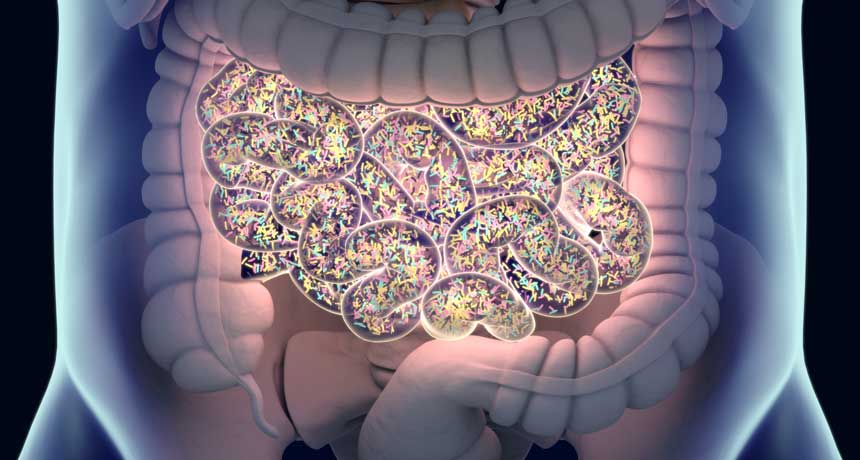
Your colon contains trillions of microorganisms.
Most of these organisms live peacefully with us and perform important jobs. But the intestinal tract can also contain opportunistic organisms such as certain strains of E. coli.
Having E. coli in the intestines isn't automatically a problem. Most strains of E. coli are harmless members of the intestinal microbiome.
But certain strains can cause urinary tract infections.
Researchers studying recurrent UTIs have found that the gut can act as a reservoir for these UTI-causing bacteria. The bacteria can live quietly in the intestines and later appear in the urinary tract. Studies have even identified closely related E. coli populations in the gut and bladder of women with recurrent urinary tract infections.
So how do they get there?
Usually, they don't travel magically through your bloodstream from the intestine directly into the bladder. The route is much more physical.
Bacteria from the intestinal tract can reach the area around the vagina and urethra. From there, certain organisms can colonize the vaginal opening and the area surrounding the urethra.
Then they can travel up the urethra into the bladder.
Researchers have described this intestine → vaginal/periurethral area → bladder pathway as an important part of how many urinary tract infections develop.
When I learned this, so many things about the microbiome began to make even more sense to me.
What happens in the gut doesn't necessarily stay in the gut.
Good microbes crowd out the bad ones.
Your body has an incredible defense system that is often overlooked: your beneficial microbes.
One of the things they do is crowd out microbes you don't want taking over.
I think of it like a garden. When the soil is full of strong, healthy plants, weeds have a much harder time finding room to grow. But when the soil is bare, weeds can quickly take over.
Your microbiome works much the same way.
Beneficial microbes take up space, use available nutrients, produce helpful acids and other compounds, and interact with your immune system. All of this helps create an environment where troublesome microbes have a harder time becoming dominant.
The goal isn't to get rid of every potentially harmful microbe. Many of them may always be present.
The goal is balance.
The more I learn about microbes, the more I see this everywhere: when your beneficial microbes are strong and abundant, they help keep the troublemakers in check.
Lactobacillus Is Especially Important for Women
 One of the most important groups of bacteria in the vaginal microbiome is Lactobacillus.
Many healthy vaginal microbial communities are dominated by various species of Lactobacillus.
These bacteria do something remarkable. They produce lactic acid.
That lactic acid helps maintain the naturally acidic vaginal environment, which makes conditions less favorable for many unwanted organisms. Lactobacilli can also compete with other microorganisms for nutrients and attachment sites and produce additional antimicrobial substances.
Think again about that garden.
When Lactobacillus bacteria are thriving, they occupy the territory.
There simply isn't as much opportunity for other organisms to take over.
Researchers have also found connections between vaginal Lactobacillus populations and urinary health. Lower levels of vaginal Lactobacillus have been associated with greater colonization by urinary pathogens and an increased susceptibility to UTIs, although this relationship is still being actively studied.
This is another reason I have become so fascinated with Lactobacillus species over the years. They aren't just digesting food. They are helping shape entire ecosystems.
This is one of the biggest reasons I eat cultured foods so consistently, and kefir has the most Lactobacillus, with many strains.
Species of Lactobacillus in Kefir
- Lb. acidophilus
- Lb. brevis [Possibly now Lb. kefiri]
- Lb. casei subsp. casei
- Lb. casei subsp. rhamnosus
- Lb. paracasei subsp. paracasei
- Lb. fermentum
- Limosilactobacillus reuteri
- Lb. cellobiosus
- Lb. delbrueckii subsp. bulgaricus
- Lb. delbrueckii subsp. lactis
- Lb. fructivorans
- Lb. helveticus subsp. lactis
- Lb. hilgardii
- Lb. helveticus
- Lb. kefiri
- Lb. kefiranofaciens subsp. kefirgranum
- Lb. kefiranofaciens subsp. kefiranofaciens
- Lb. parakefiri
- Lb. plantarum
Your Bladder Has a Microbiome Too
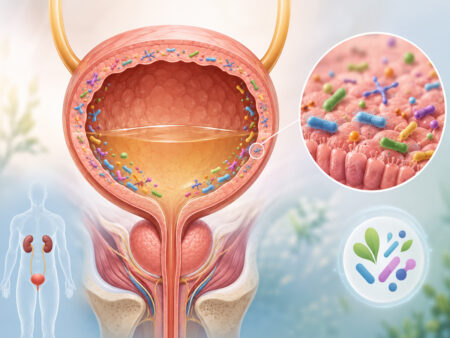 For decades, doctors were taught that healthy urine was sterile. Researchers began finding bacteria in the urinary tracts of healthy people who had no infection at all.
The bladder appears to have its own low-biomass microbial ecosystem, although scientists are still learning which organisms belong there and exactly what roles they play. That changes the way we can think about urinary health.
Instead of seeing the bladder as a sterile container that occasionally gets invaded by bacteria, we can begin to see it as another microbial ecosystem. And ecosystems depend on balance.
The Gut and Recurrent UTIs
The gut connection becomes particularly interesting when researchers study women who experience recurrent urinary tract infections.
In one year-long study, researchers compared women with and without a history of recurrent UTIs. The women with recurrent UTIs had lower gut microbial richness and fewer bacteria associated with producing butyrate — an important short-chain fatty acid produced by certain beneficial gut microbes.
Another study examining recurrent UTIs found evidence supporting the gut as a reservoir for UTI-causing E. coli and suggested that movement of these organisms between microbial habitats could contribute to recurrence. This doesn't mean every UTI begins with gut dysbiosis.
UTIs are complicated, and many factors can influence them. But it does tell us something profound:
We cannot always treat one part of the body as though it exists separately from everything else.
The gut affects the immune system.
The gut produces metabolites.
The gut houses microbes that can influence other areas of the body.
And neighboring microbial ecosystems can affect one another.
Antibiotics Can Change More Than the Infection
Antibiotics can be lifesaving, and there are times when we absolutely need them. But antibiotics don't discriminate between the organism causing an infection and the beneficial bacteria living alongside it.
This is why repeated antibiotic exposure can sometimes create a difficult cycle. An antibiotic may remove the immediate pathogen while also disrupting beneficial microbial populations in the gut or vaginal microbiome. That newly opened ecological space can then allow opportunistic organisms to flourish again.
Researchers studying recurrent UTIs have become increasingly interested in this cycle and in ways to restore microbial communities after antibiotic treatment. This is not a reason to avoid an antibiotic when you need one. It is a reason to understand that supporting the microbiome matters too.
Crowding Out Happens Everywhere
 I'm not trying to sterilize my body. Quite the opposite.
I want it filled with microbes.
The right microbes, in the right places, performing the jobs they've performed alongside humans for thousands of years.
Feed the Microbes You Want to Keep
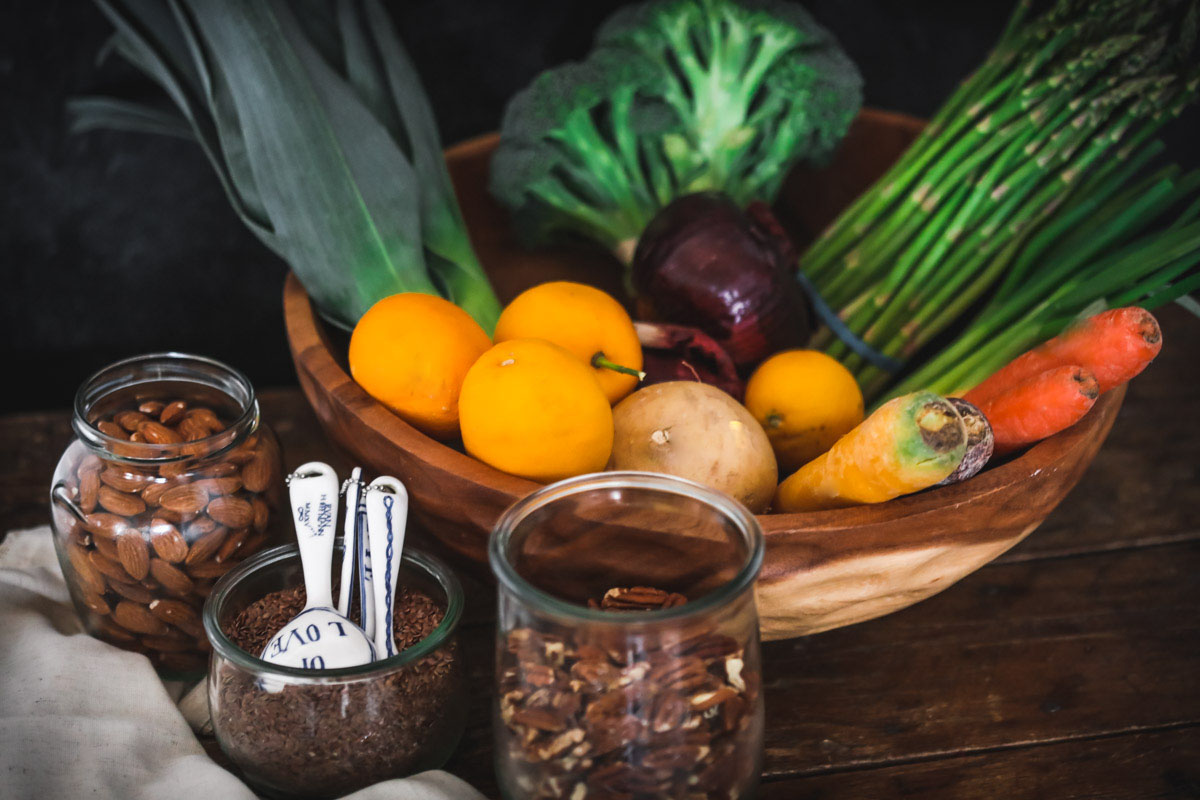
This is also why feeding your microbes matters as much as consuming beneficial organisms. Your intestinal bacteria need food.
Many of the organisms we associate with a healthy gut thrive on fibers and plant compounds that pass through the upper digestive tract and reach the colon.
That's why I love incorporating a variety of:
- vegetables
- fruits
- herbs and spices
- legumes
- resistant starches
- prebiotic fibers
- fermented vegetables
- kefir and kefir soda
- cultured dairy cottage cheese, yogurts
- kombucha
- and other traditionally fermented foods into my diet.
Different foods feed different organisms.
And I don't think about this as feeding me anymore.
I think about feeding us.
Me and the trillions of organisms that live with me.
Your Microbes Are Part of You
Instead of always asking:
"How do I get rid of the bad bacteria?"
Maybe we should also be asking:
"How do I help the good microbes become so strong and abundant that the troublesome ones have a much harder time taking over?"
That is the lesson my microbes have taught me again and again.
Cultivate the ecosystem. Feed the organisms you want to flourish. And let your good microbes do what they were designed to do.
Check it out my summer Ebooks
This is the final ebook in my "What I'm Fermenting & Eating This Summer" series, and I saved some really delicious recipes for the end!
Collect them all!






Listen To My Podcast
Your microbiome is doing so much more than helping you digest food. Your beneficial microbes are constantly helping to keep opportunistic microbes in check—and this protection extends far beyond your gut.
In this episode, I’m talking about how good microbes crowd out the bad ones, why balance matters more than trying to eliminate every harmful organism, and the fascinating connection between the gut, vaginal, and bladder microbiomes.
The more I learn about microbes, the more I realize that everything is connected. 🌿
Feed the microbes you want to flourish, and they can help create an environment where the troublemakers have a much harder time taking over.
Are you on the list?
Sign up today and I'll send you my free Getting Started Guide!
Each week I'll send you updates, tips, recipes, and more! You might even be a winner of my weekly giveaway! (starter cultures, memberships, and more!)
Come be a part of my cultured food family!