Look for me on:



🥛 How Kefir Helps Support Healthy Blood Sugar (And Why It Worked for Me)
Which Is Better?
The Answer I Didn’t Know I Was Looking For
For years, I struggled to understand what my body needed. When my blood sugar got out of balance, it broke me. I knew a lot about the effects of high blood sugar, and I had witnessed family members struggle with this every day.
But what I didn’t know was that beneath the fear and confusion of why I had high blood sugar… I was already whole. There was help for me. I just had to ask for it—and apply it.
Then… in walked kefir.
The answer to my prayers… and soon, unbeknownst to me, my best friend for the last 24 years.
So many of us are trying to fix our bodies… control them… restrict them. But sometimes, the body doesn’t need more pressure.
What if the real work is not to add more… but to return? It needs support. It needs the right environment to do what it was designed to do.
And that’s where foods like kefir come in.
🌿 An Ancient Food That Still Speaks Today
Kefir is a food that has been here for thousands upon thousands of years. Its history dates back to ancient traditions, with references found across regions such as Turkey and beyond
And I often ask myself…
Is it by accident that kefir contains components that can bring balance when things go haywire?
It did for me.
And so here we are… in the modern world, rediscovering something very old.
I chose to embrace this ancient wisdom—foods that have truly stood the test of time. And this choice has led me to you.
And since I’ve lived a good portion of my life with kefir by my side, I want to help you understand what it does, why it works scientifically, and why it has continued to work—not just for me—but for so many others.
 What Makes Kefir Different?
 What Makes Kefir Different?
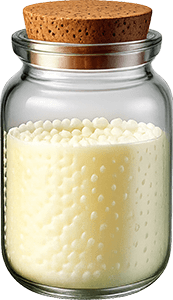
 Kefir is a fermented milk drink made from kefir grains—little living communities of beneficial bacteria and yeast working together.
And that’s what makes it so unique.
Most foods—even other fermented foods—don’t have this kind of diversity.
Kefir contains:
- Dozens of strains of beneficial bacteria
- Beneficial yeasts that work alongside them
- Over 50+ bacteria and yeast working together
- Enzymes and compounds created during fermentation
It’s not just what’s in kefir… it’s what kefir creates as it ferments.
🔬 The Hidden Compounds Most People Don’t Know About
When kefir ferments, something remarkable happens.
The bacteria begin breaking down the proteins in milk—especially casein—and in the process, they create bioactive peptides. [1]
These are tiny protein fragments that can have powerful effects in the body.[2]
Some of these peptides have been shown to support metabolic processes—including those involved in blood sugar regulation. [3]
One of the ways they may do this is by influencing an enzyme called DPP-4.[2]
Why DPP-4 Matters
DPP-4 is an enzyme in the body that breaks down hormones that help regulate blood sugar.
When those hormones stay active longer, your body can:
- Manage glucose more effectively
- Support better balance after meals
- Reduce sharp spikes and crashes
Certain compounds formed during fermentation—like the peptides in kefir—may help slow down this process naturally. [4]
Some medications work by targeting an enzyme called DPP-4…
and what’s fascinating is that kefir creates natural compounds during fermentation that may support your body in a similar way.
🌿 How Kefir Helps Calm Inflammation
 (And Why That Matters for Blood Sugar)
 (And Why That Matters for Blood Sugar)
There’s something else happening in the body that most people don’t connect to blood sugar…
Inflammation.
When inflammation is high, the body has a harder time regulating blood sugar.
Cells don’t respond as well.
Signals get disrupted.
And everything feels a little more out of balance.
What’s fascinating is that kefir doesn’t just work on one pathway.
It works on many.
Research has shown that kefir can help:
- Reduce pro-inflammatory cytokines like TNF-α and IL-6[6]
- Support the balance between inflammatory and anti-inflammatory signals [7]
- Improve the gut environment, which plays a major role in whole-body inflammation. [2]
And that’s important—because your gut is one of the main places inflammation begins.
When the gut is out of balance, inflammation can rise.
And when inflammation rises, blood sugar often follows.
🧬 The Gut–Inflammation–Blood Sugar Connection
Kefir helps restore balance in the gut by:
- Increasing beneficial bacteria
- Supporting the intestinal barrier
- Helping produce compounds like short-chain fatty acids
These changes can help calm inflammation at its source.
And when inflammation goes down…
👉 Blood sugar often becomes easier to manage.
Why Kefir Often Works Better Than Yogurt
I love yogurt. It’s a beautiful, nourishing food that can really help support the microbiome.
Kefir just works a little differently.
Yogurt is made with a few strains of beneficial bacteria, while kefir contains a wider variety of bacteria along with beneficial yeast. That combination creates a more diverse fermentation.
And with that comes:
- A deeper breakdown of proteins
- A wider range of beneficial compounds
- Additional support for the gut
That’s why many people choose to include both—but often notice something extra when kefir becomes part of their daily routine. It’s not about choosing one over the other… it’s about understanding what each one does. And if you’re struggling with blood sugar, kefir can be a wonderful place to start.
🥄 How to Start Using Kefir
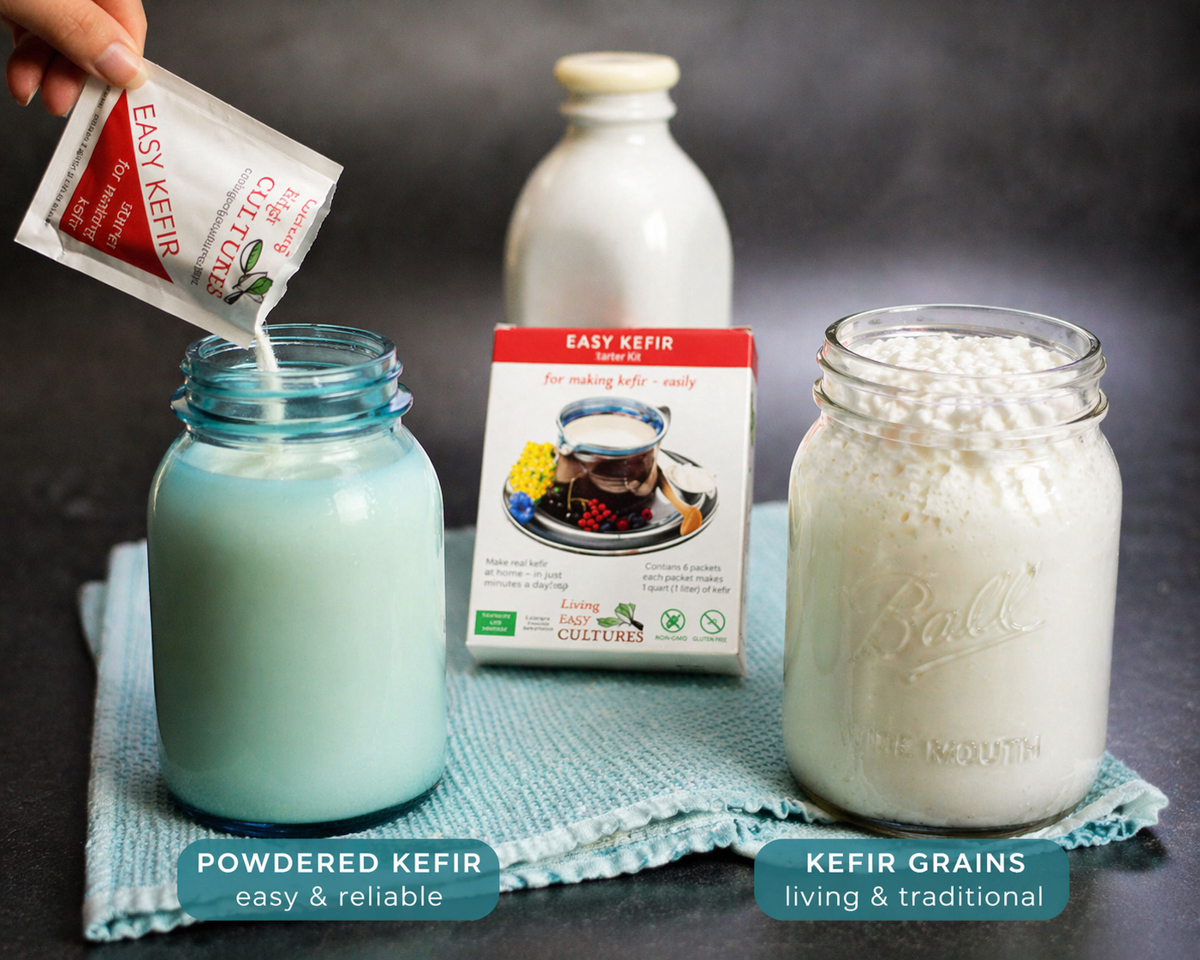
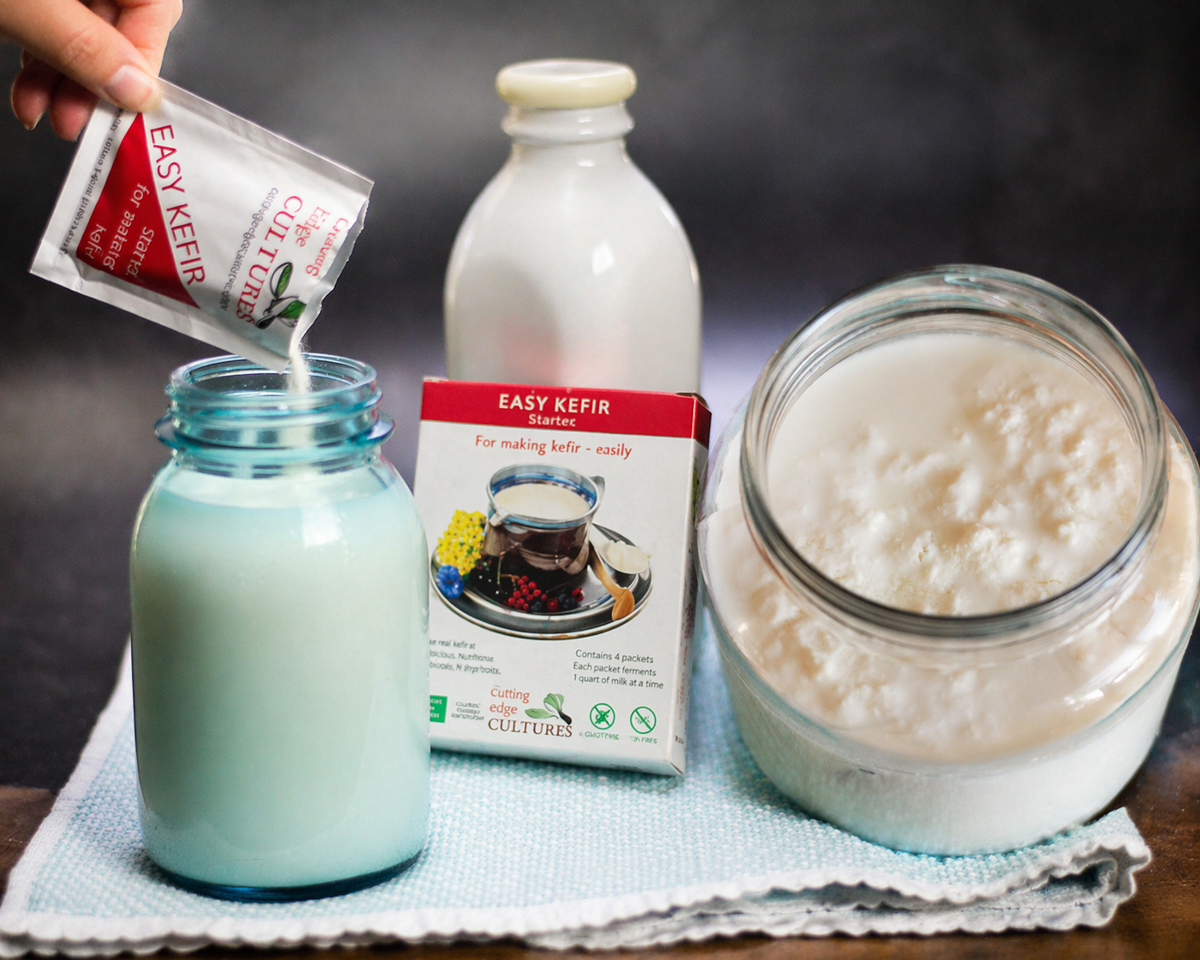
I started with a powdered version of kefir because I wanted something simple and easy.
I noticed benefits right away.
Later, I switched to kefir grains—but honestly, I do both. And for me, the benefits have felt very similar.
The powdered version is made from flash-frozen kefir cultures, and it can be a wonderful place to begin. It’s easy and reliable, and you can make batch after batch by re-culturing.
Kefir grains are wonderful too—but they do require a little care, almost like a living culture you’re tending. When you take care of them, they can make all the difference.
You don’t need a lot to begin.
Start with:
- 1/2 to 1 cup per day
You can:
- Drink it plain
- Add it to smoothies
- Use it in recipes
The key is consistency.
This isn’t about adding more pressure…
it’s about returning to something simple your body understands.
🌿 Sometimes the body doesn’t need more restriction…
It needs nourishment.
It needs support.
It needs a way back.
Kefir is one of those foods that works quietly in the background—helping restore balance in ways you may not even notice at first.
Until one day…
You feel different.
Recipes To Make Kefir

How to Make Milk Kefir
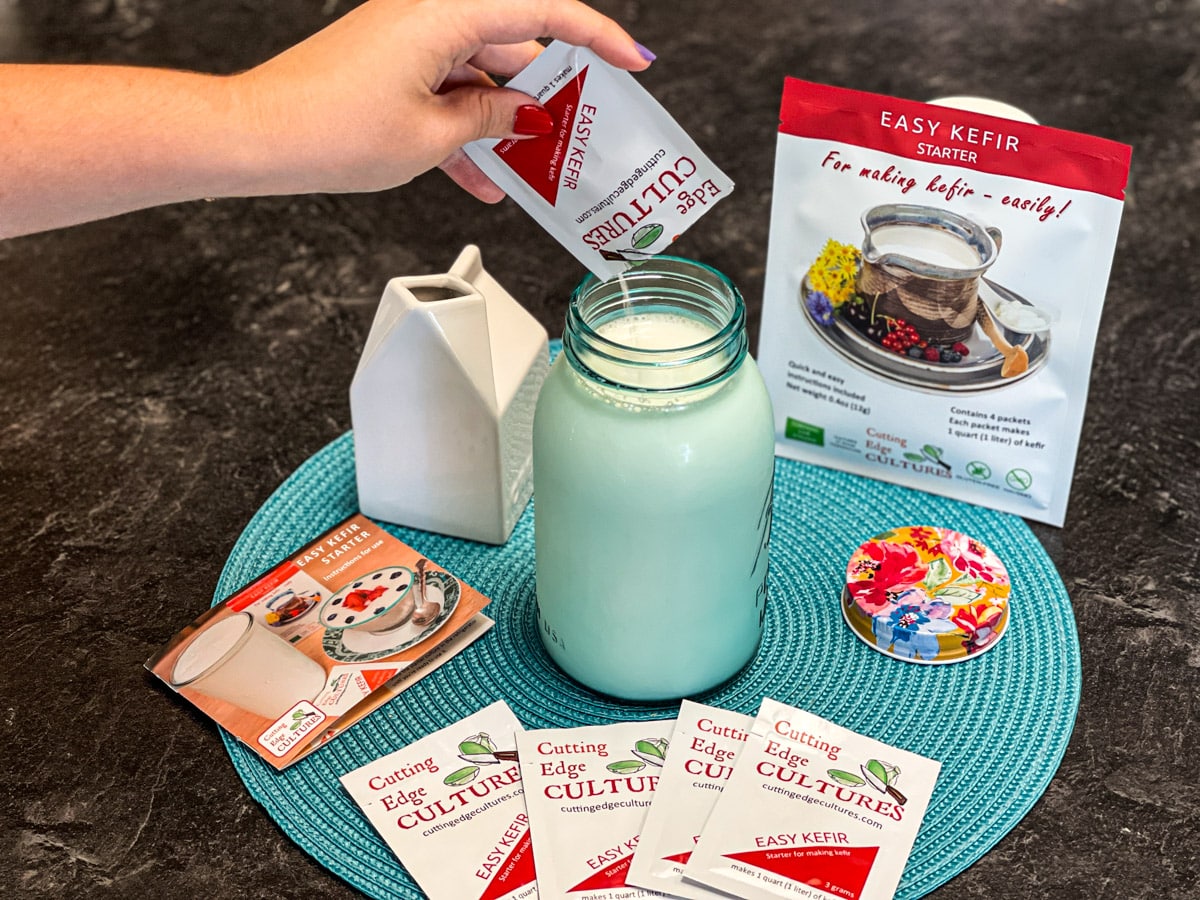
How to Make Easy Kefir
Listen To My Podcast
Two people can eat the same food and have completely different blood sugar responses. Why? In this episode, we uncover what’s happening before glucose ever hits your bloodstream—and how fermented foods like kefir, yogurt, and cultured vegetables can make all the difference.
References I talked about:
References:
-
- https://pmc.ncbi.nlm.nih.gov/articles/PMC6163919/
- https://pmc.ncbi.nlm.nih.gov/articles/PMC8226494/
- https://pmc.ncbi.nlm.nih.gov/articles/PMC6113382/
- https://onlinelibrary.wiley.com/doi/10.1155/2015/146840?
- https://www.researchgate.net/publication/334540456_The_effect_of_in_vitro_gastrointestinal_simulation_on_bioactivities_of_kefir
- Kefir and inflammatory markers (TNF-α, IL-6)
https://pubmed.ncbi.nlm.nih.gov/35405603/ - Fermented foods and gut microbiome diversity
https://pmc.ncbi.nlm.nih.gov/articles/PMC4401881/
Are you on the list?
Sign up today and I'll send you my free Getting Started Guide!
Each week I'll send you updates, tips, recipes, and more! You might even be a winner of my weekly giveaway! (starter cultures, memberships, and more!)
Come be a part of my cultured food family!