Look for me on:



What Happens to Sugars When You Ferment Food
Sugar and Fermentation
Fermentation
One of the most fascinating things about fermented foods is something most people never realize.
When you ferment food, the sugar doesn’t just sit there.
The microbes start eating it.
Bacteria and yeasts use sugar as their fuel source. As they consume it, they transform it into completely different compounds — things like organic acids, carbon dioxide, enzymes, and beneficial metabolites.
This transformation is what gives fermented foods their tangy flavor, their bubbles, and many of their unique properties.
And it’s one of the reasons fermented foods behave so differently in the body.
Microbes Use Sugar as Fuel
When fermentation begins, the microbes immediately get to work.
They consume the sugars in the food and convert them through their natural metabolic processes. Instead of sugar remaining in its original form, it gets transformed into other substances.
For example:
-
Lactic acid bacteria convert sugars into lactic acid
-
Yeasts convert sugars into carbon dioxide and very small amounts of alcohol. Similar to juice
-
Other microbes create beneficial compounds that help preserve the food
This process gradually changes the flavor of the food. What begins as something sweet slowly becomes more tangy and complex.
That tangy taste is actually a sign that fermentation is doing its work.
Why Fermented Foods Taste Less Sweet
If you’ve ever made kombucha, kefir soda, yogurt, or sourdough, you may have noticed that the sweetness fades over time.
That happens because the microbes are literally consuming the sugars during fermentation.
The longer fermentation continues, the more sugar is typically used by the microbes. As they metabolize these sugars, they produce acids and other compounds that give fermented foods their distinctive flavor.
This is why fermented foods often move through a flavor progression:
sweet → mildly tangy → pleasantly sour.
The change in taste is simply the microbes transforming the original ingredients.
Milk Kefir
Milk kefir is one of the clearest examples of how fermentation transforms sugar.
Milk naturally contains about 12-15 grams of lactose (milk sugar) per cup. But when kefir grains ferment milk, the bacteria and yeasts begin consuming lactose as their primary fuel.
As the microbes feed on lactose, much of that sugar is converted into other compounds, such as lactic acid. This is why kefir develops its characteristic tangy taste.
In fact, one cup of whole milk contains about 148 calories, but when that same milk is fermented into kefir, the calories drop to about 104 because much of the milk sugar is used by the microbes during fermentation.
Kefir can end up being about 99% lactose free, which is why many people who struggle with lactose intolerance are able to drink it comfortably.
The microbes simply did the work of transforming the sugar. Calories in Kefir

Yogurt
The same principle happens when milk is fermented into yogurt. The microbes begin consuming sugars, transforming proteins, and creating new compounds that alter both the food and the way our bodies experience it. Yogurt will have slightly more sugar, like a few grams, than kefir because it has fewer microbial and yeast strains.
Yogurts that ferment longer often contain fewer carbohydrates. For example, L. reuteri yogurt is typically fermented for about 36 hours, which allows the bacteria more time to consume lactose.
Most traditional yogurts contain about 1–3 grams of carbohydrates per serving, depending on fermentation time and milk type.
Check out all the nutritional counts on Greek and Skyr yogurt.
Kefir Soda
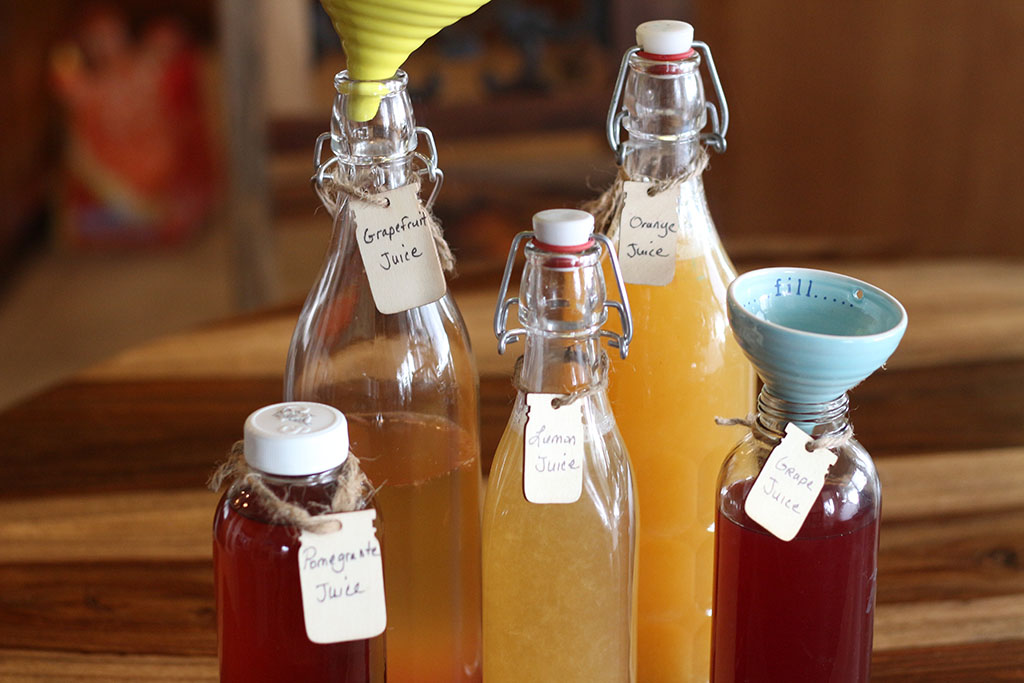
When you first mix fruit juice with a kefir soda starter, the liquid tastes sweet because the natural sugars in the juice are still present. But once fermentation begins, the microbes start using those sugars as their fuel source. As the bacteria and yeasts grow, they begin transforming the sugars into carbon dioxide, organic acids, and other compounds that give fermented drinks their tangy flavor and natural bubbles.
After four days of fermentation, laboratory testing showed that the natural sugars in the juice solution were reduced by about 82%. The estimated nutritional values for 1 cup (240 ml) of fermented kefir soda made from 100% grape juice are approximately:
- Calories: 27
- Carbohydrates: 6.48 g
- Sugars: 6.12 g
- Protein: 0.5 g
- Fat: 0 g
- Vitamin C: 20% DV
- Potassium: 250 mg
And the process doesn’t completely stop when you move the soda to the refrigerator. The microbes continue working slowly, so the longer the soda sits in the fridge, the more of the remaining sugars are reduced.

Kombucha
People often worry when they see sugar used to make kombucha, but something really important is happening during fermentation.
The sugar isn’t there for us — it’s there for the microbes.
When you make kombucha, you start with sweet tea. But the SCOBY — the bacteria and yeast — begin consuming that sugar almost immediately. As they eat it, they transform it into beneficial acids, enzymes, carbon dioxide, and tiny amounts of alcohol that continue to get converted as fermentation goes on.
For kombucha, the exact carbohydrate conversion isn’t precisely known because it varies with fermentation. On average, plain kombucha contains about 7–10 grams of carbohydrates per 8-ounce glass. The final amount depends on several factors, including how long you ferment it, the strength of your starter culture, and whether you do a second fermentation with fruit or juice. The longer kombucha ferments, the more sugar the microbes consume, which is why the flavor becomes more tart over time.
Sourdough

Fermented Vegetables
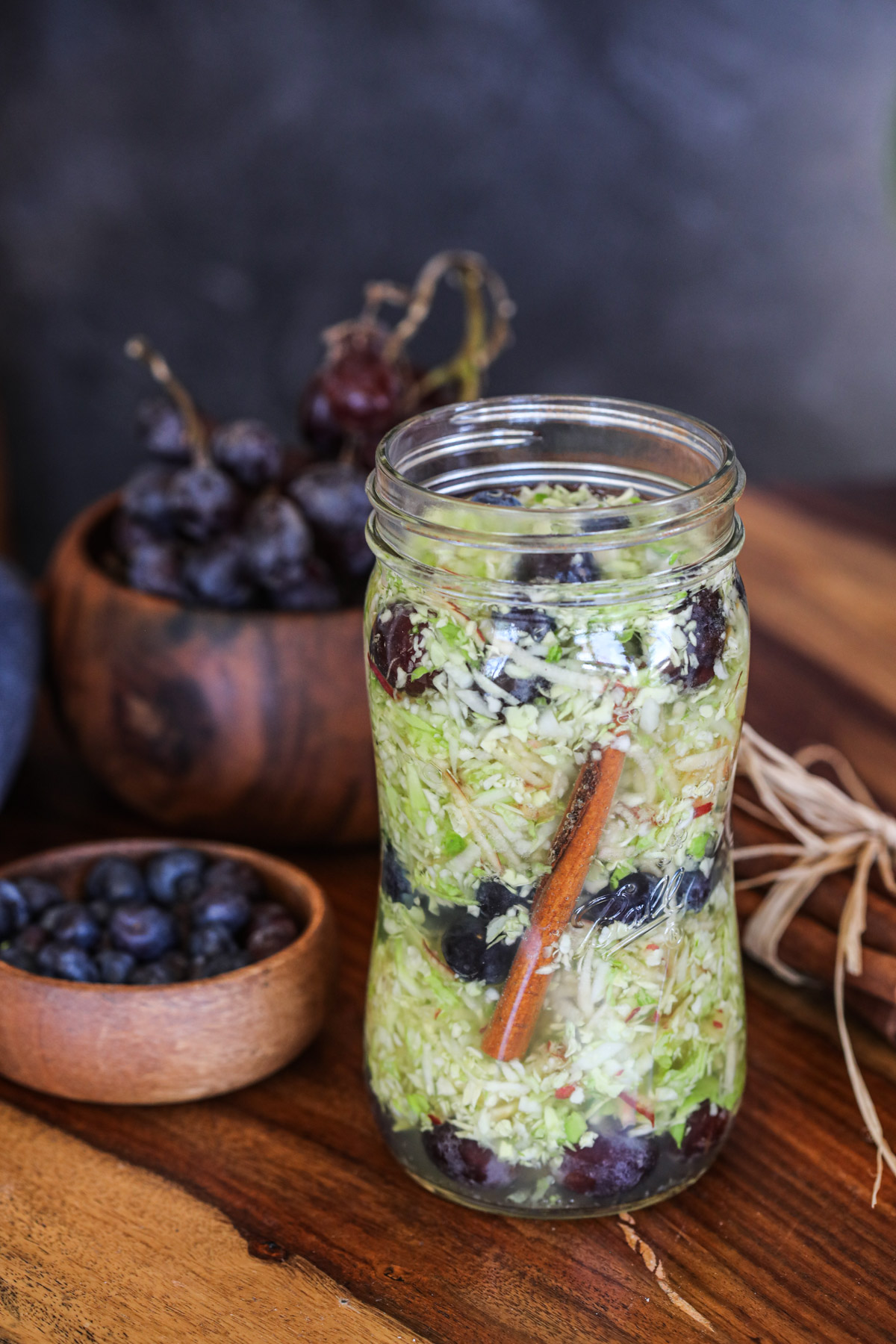
Fermented vegetables work in a similar way. Vegetables naturally contain small amounts of sugar that beneficial bacteria use during fermentation.
When you ferment cabbage into sauerkraut or cucumbers into pickles, lactic acid bacteria begin feeding on those natural sugars. As they consume them, they produce lactic acid. This acid preserves the vegetables and gives them their pleasantly sour taste.
Fermentation also begins breaking down plant fibers and carbohydrates, which can make fermented vegetables easier for many people to digest.
In the end, something very simple happens:
the microbes transform the vegetables.
They take the natural sugars and turn them into acids, flavor compounds, and beneficial microbes. What starts as a simple cabbage or cucumber becomes a living food filled with helpful bacteria that support the body and the microbiome.
The Beauty of Microbial Transformation
So there you have it. What happens to sugar during fermentation is pretty amazing. The microbes use it as fuel and transform it into something completely different. ✨
Fermentation changes the food, and in many ways, it changes us too. These tiny organisms are doing work we can’t even see — turning simple ingredients into foods that nourish and support the body in remarkable ways. 🦠
Put a jar of fermented food on your counter, walk away, and let the microbes do what they were designed to do. Come back later, open the jar, and witness the transformation. 🫙
Eat these foods. Let them nourish you. Let them support you. Let them enhance everything else you eat alongside them.
We were created to live in partnership with these microbes. Trillions of tiny helpers live inside of us and all around us, working quietly on our behalf every single day.
Sometimes all we have to do is give them the food they love and the time to do their work. ⏳
We are fearfully and wonderfully made — and the more we learn about the microbial world, the more that truth becomes clear. 💛
Are you on the list?
Sign up today and I'll send you my free Getting Started Guide!
Each week I'll send you updates, tips, recipes, and more! You might even be a winner of my weekly giveaway! (starter cultures, memberships, and more!)
Come be a part of my cultured food family!