Look for me on:



Skyr: A Thousand Years of Strength—From Spoon to Bread
A food doesn’t survive a thousand winters unless it truly nourishes
Skyr: Simple, Strong, and Deeply Nourishing
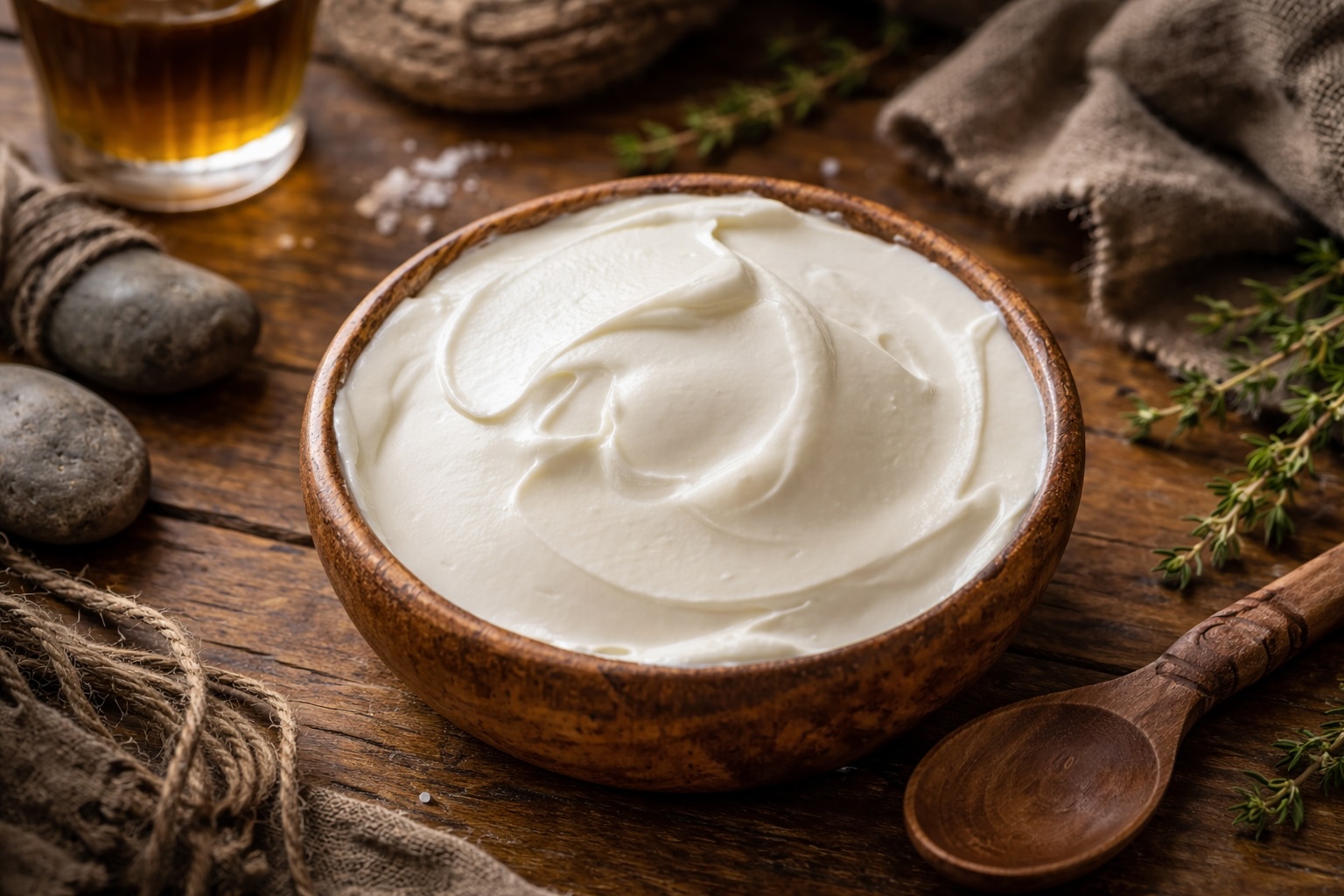
Ancient Icelandic strength for modern gut health. Skyr (pronounced skeer) may look like yogurt, but it carries a story—and a strength—that reaches back more than a thousand years.
This humble, thick, protein-rich cultured milk has nourished generations through some of the harshest climates on earth. And today, it’s finding its way back into modern kitchens for very good reason. I’ve always loved foods with a memory—foods that stood the test of time because they worked.
Skyr is one of those foods.
Skyr may be the best-tasting yogurt I’ve ever had. I make it constantly, eat it constantly, and find myself using it in more recipes than I ever expected. It’s become one of those foods I truly look forward to.
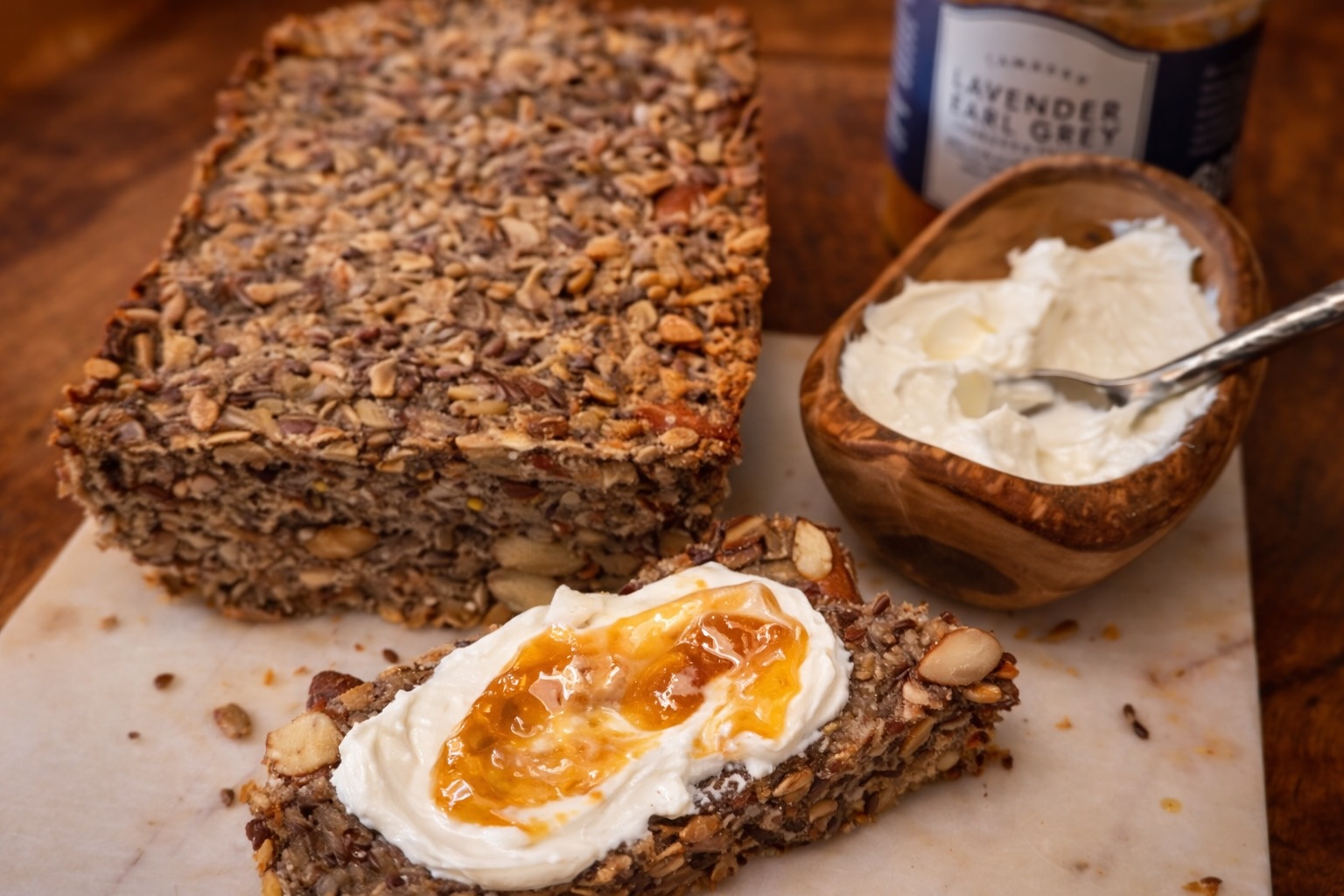
As I learned about the Viking traditions behind skyr, I felt inspired to slow down and honor that history. I baked a rustic Viking-style bread made from seeds and nuts, just so I could spread my skyr on top. It felt grounding—simple, nourishing, and deeply satisfying.
A Brief History of Skyr
Skyr originated in Iceland over 1,000 years ago, brought by Norwegian Vikings who settled the island in the 9th century.
In a land with long winters, limited crops, and little margin for waste, preservation and nourishment mattered deeply. Milk was precious, and fermenting it into skyr helped families store nutrition safely while concentrating protein and beneficial bacteria.
Traditionally, skyr was made from skimmed milk and cultured using specific strains passed from batch to batch.
It was then strained—sometimes through cloth—to create its signature thickness.
For centuries, skyr wasn’t just food; it was survival.
What’s remarkable is that while many ancient foods disappeared with modernization, skyr never left Icelandic kitchens.
It remained a daily staple—quietly doing its job.
🛡️ The Viking Household Skyr Story
In Viking-age Iceland, skyr wasn’t made by warriors — it was made by women in the home.
After milking the cows and sheep, the milk was gently warmed over a hearth. A small portion of skyr from the previous batch was added — a living culture passed down like an heirloom. This starter was guarded carefully. Losing it meant starting over, which could take weeks in a land where food was scarce.
The milk was then left to ferment and strained through linen or woven cloth bags. The thick skyr was stored in wooden tubs or ceramic vessels and eaten daily — often with dried berries in summer or a drizzle of whey in winter.
This wasn’t luxury food.
This was food that kept families alive.
❄️ Skyr and the Icelandic Winters
Icelandic winters were brutal. Little sunlight. Limited fresh food. Long months of cold.
Skyr became a foundation food because:
- It lasted longer than fresh milk
- It provided protein when meat was scarce
- It supported digestion when diets were heavy and repetitive
Historical records show that skyr was often eaten every day, sometimes more than once — especially by children and elders.
If a food failed people during winter, it disappeared.
Skyr never did.
⚔️ Viking Travel & Strength
While warriors didn’t carry skyr into battle, they grew up eating it.
Viking sagas describe men who were:
- Strong
- Enduring
- Able to travel long distances by sea and land
- Their strength came from daily nourishment, not occasional feasts.
Skyr, along with fermented fish and sour whey (called mysa), formed a microbial backbone of their diet — long before anyone understood bacteria.
They didn’t know why it worked.
They only knew it did.
🧵 The Passing of the Culture
One of the most touching parts of Skyr’s history is that the culture was passed from household to household.
Mothers gave daughters a spoonful of skyr when they married and started their own homes. That culture might trace its lineage back hundreds of years.
Even today, traditional Icelandic skyr relies on strains that have been preserved and protected for generations.
That’s not marketing.
That’s memory.
Is Skyr Yogurt or Cheese?
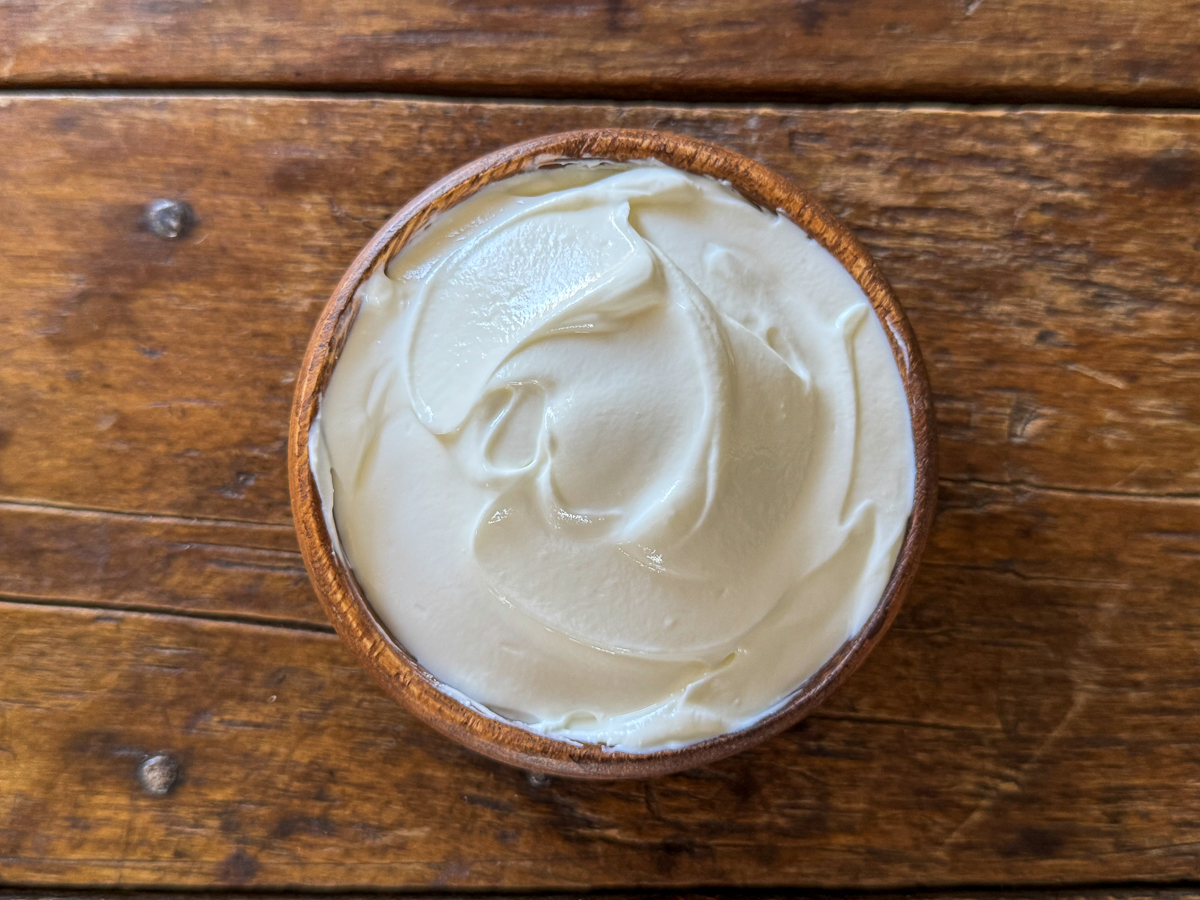 Technically, skyr is closer to a fresh cheese than yogurt because it’s made with more milk and then strained.
But nutritionally and culturally, it functions much like yogurt—and most of us enjoy it the same way. What matters most is what straining does:
- Concentrates protein
- Reduces lactose
- Creates a thick, creamy texture without additives
This makes skyr especially gentle and satisfying for many people.
Nutritional Benefits of Skyr
1. High Protein, Naturally
Skyr delivers a dense dose of protein without heaviness.
Protein helps stabilize blood sugar, supports muscle repair, and keeps you full longer—especially helpful in the morning or as a healing snack.
2. Easier to Digest
Because skyr is fermented and strained, much of the lactose is reduced.
Many people who struggle with regular dairy find skyr far more comfortable.
3. Supports Gut Health
When made traditionally with live cultures, skyr contributes beneficial bacteria that help:
- Support digestion
- Strengthen the gut lining
- Encourage microbial diversity
Fermented foods don’t overwhelm the body—they work with it.
4. Rich in Calcium & Minerals
Skyr provides calcium and other minerals in a bioavailable form—meaning your body can actually use them.
Why I Love Skyr
I’m always drawn to foods that are simple, ancient, and deeply nourishing.
Skyr checks all those boxes.
I love how grounding it feels—how it feeds the body without drama.
No spikes. No crashes. Just steady nourishment.
- You want something protein-rich but gentle
- You’re rebuilding digestion
- You need a simple, reliable cultured food
It’s not flashy. It’s faithful.
 How to Enjoy Skyr
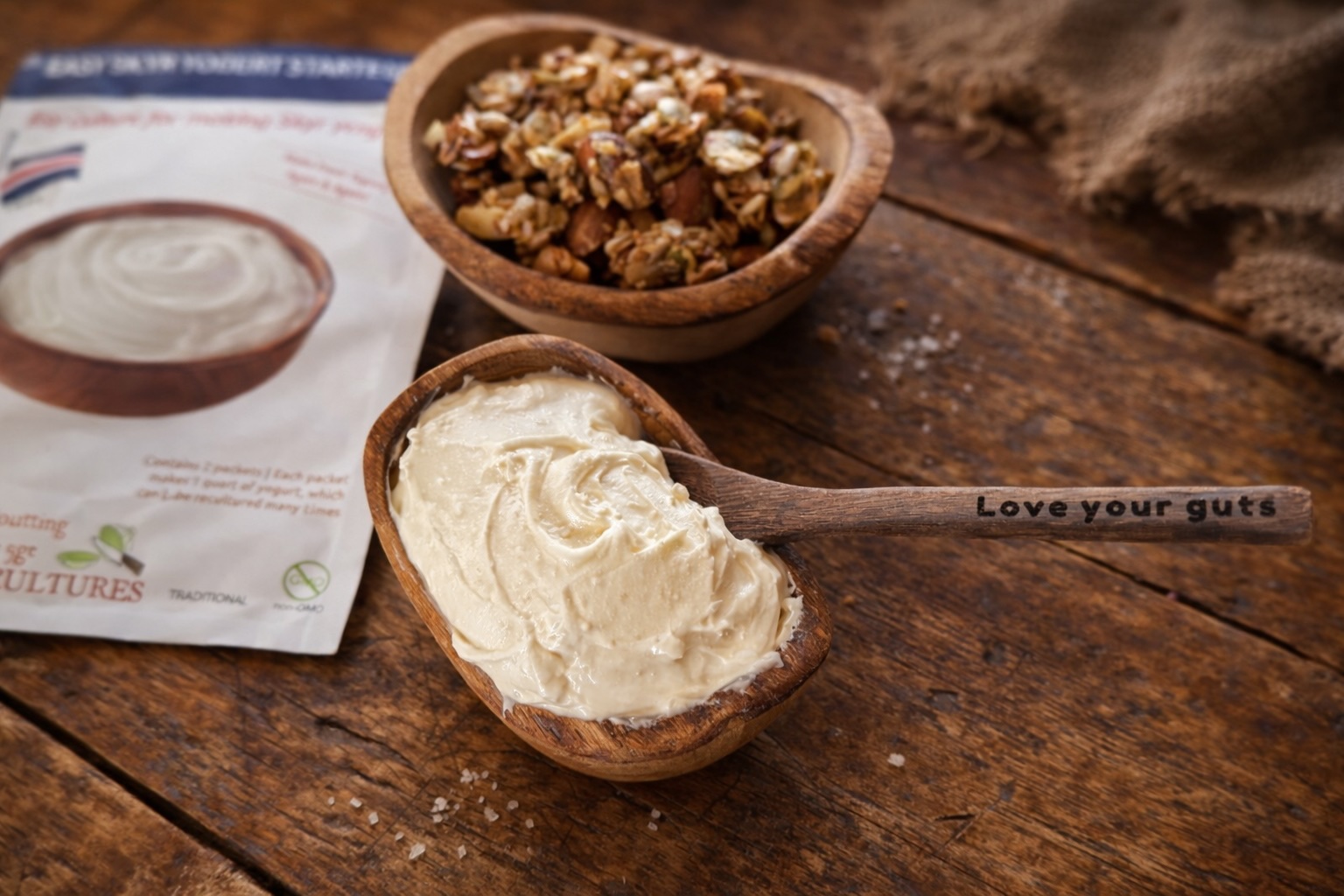 How to Enjoy Skyr
- As a breakfast bowl with stewed fruit or honey
- Blended into smoothies for creaminess and protein
- Used in place of sour cream or mayo
- Paired with nuts, seeds, or a drizzle of raw honey
Because it’s thick, a little goes a long way.
Skyr Viking Bread 

I once visited the Danish village of Solvang, California, and stopped in a small café that served rustic Viking-style bread. Something about it stayed with me. I was intrigued by its simplicity and heartiness, and when I came home, I couldn’t stop thinking about recreating it in my own kitchen.
I decided to make my own version, adding skyr yogurt along with a generous mix of nuts and seeds. Much to my surprise, it turned into one of the tastiest gluten-free breads I’ve ever made—deeply flavorful, wonderfully filling, and rich in protein and fiber.
While the live probiotics in skyr don’t survive the heat of baking, the skyr itself gives the bread an incredible tenderness and moisture that’s hard to match. And the best part? You can spread the finished loaf with fresh skyr for a delicious, nourishing boost of probiotics—turning a simple slice of bread into something truly special.
Skyr reminds us that some of the strongest foods come from the simplest traditions.
Long before nutrition labels and food trends, people trusted what worked—and passed it on.
When we bring foods like skyr back into our kitchens, we’re not chasing a diet.
We’re reconnecting with wisdom.
And your body remembers. 💛
Skyr Viking Bread
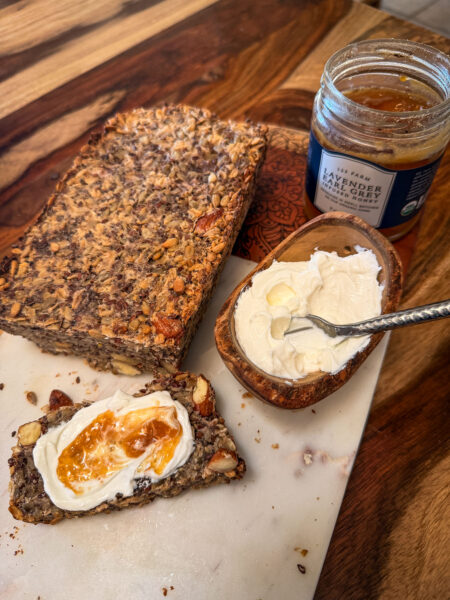 I once visited the Danish village of Solvang, California, and stopped in a small café that served rustic Viking-style bread. Something about it stayed with me. I was intrigued by its simplicity and heartiness, and when I came home, I couldn’t stop thinking about recreating it in my own kitchen.
I decided to make my own version, adding skyr yogurt along with a generous mix of nuts and seeds. Much to my surprise, it turned into one of the tastiest gluten-free breads I’ve ever made—deeply flavorful, wonderfully filling, and rich in protein and fiber.
While the live probiotics in skyr don’t survive the heat of baking, the skyr itself gives the bread an incredible tenderness and moisture that’s hard to match. And the best part? You can spread the finished loaf with fresh skyr for a delicious, nourishing boost of probiotics—turning a simple slice of bread into something truly special.
Skyr reminds us that some of the strongest foods come from the simplest traditions.
Long before nutrition labels and food trends, people trusted what worked—and passed it on.
When we bring foods like skyr back into our kitchens, we’re not chasing a diet.
We’re reconnecting with wisdom.
And your body remembers. 💛
Check out The Recipes
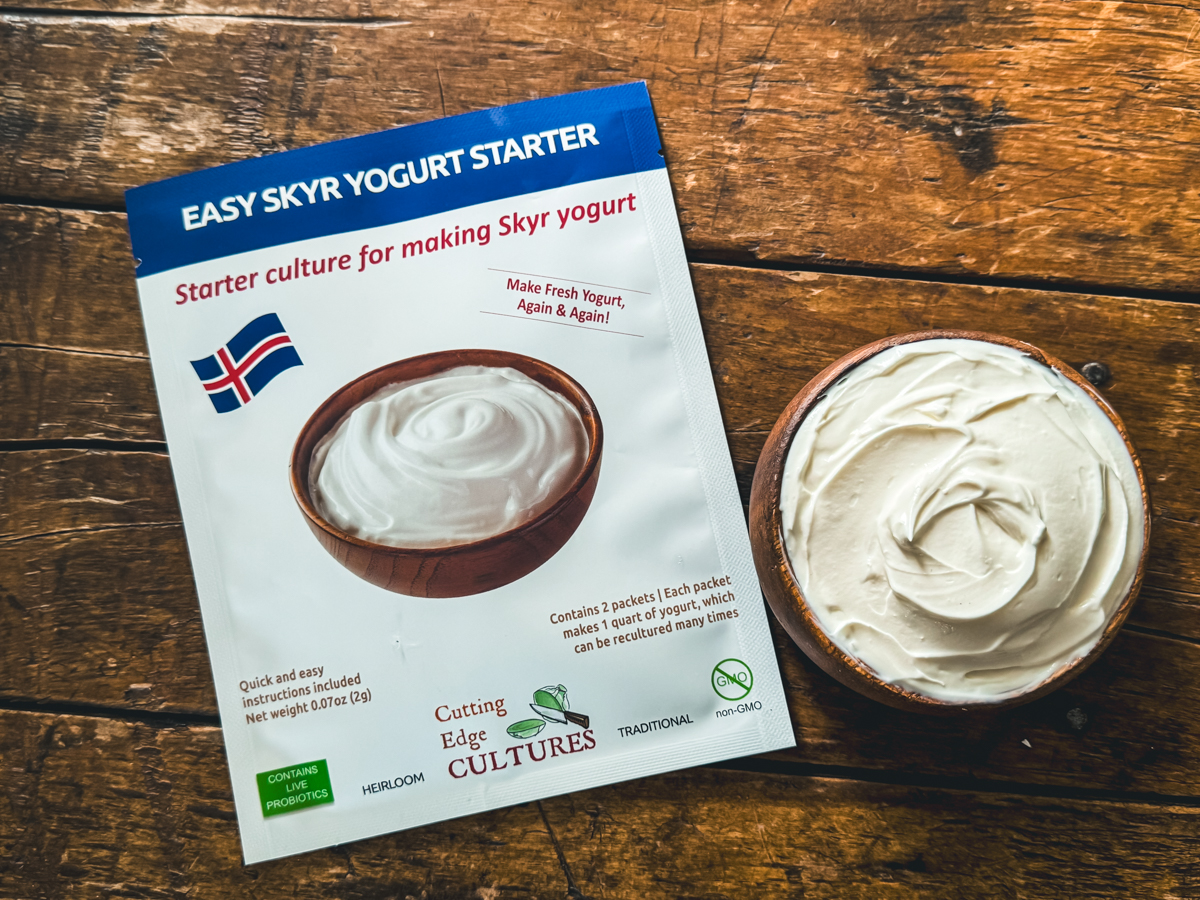
Easy Skyr Yogurt
Skyr Viking Bread
Listen To My Podcast
In this episode, I share the ancient story of skyr—an Icelandic cultured food that has nourished people for more than a thousand years. Skyr wasn’t a trend or a treat. It was relied upon, day after day, to sustain families through long winters and hard work. I also share how a visit to a Danish village inspired me to create a Viking-style seed and nut bread enriched with skyr—one of the most satisfying gluten-free breads I’ve ever made.
Are you on the list?
Sign up today and I'll send you my free Getting Started Guide!
Each week I'll send you updates, tips, recipes, and more! You might even be a winner of my weekly giveaway! (starter cultures, memberships, and more!)
Come be a part of my cultured food family!