Look for me on:



Easy Kefir: The Cultured Food I Recommend for Beginners
Foods that support you
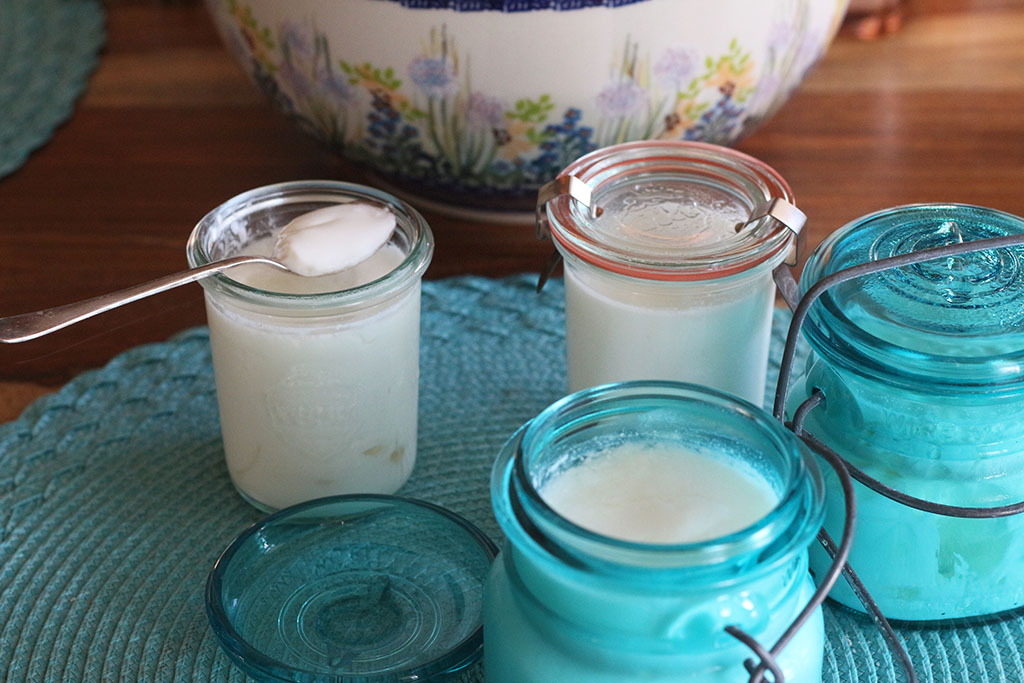
Giving you the same simple place to start that I had
When I first began making kefir more than 25 years ago, I actually started with a powdered kefir starter because it felt simple and approachable. I didn’t know anything about maintaining kefir grains, and I just wanted to make a successful batch without complicated equipment or confusing instructions.
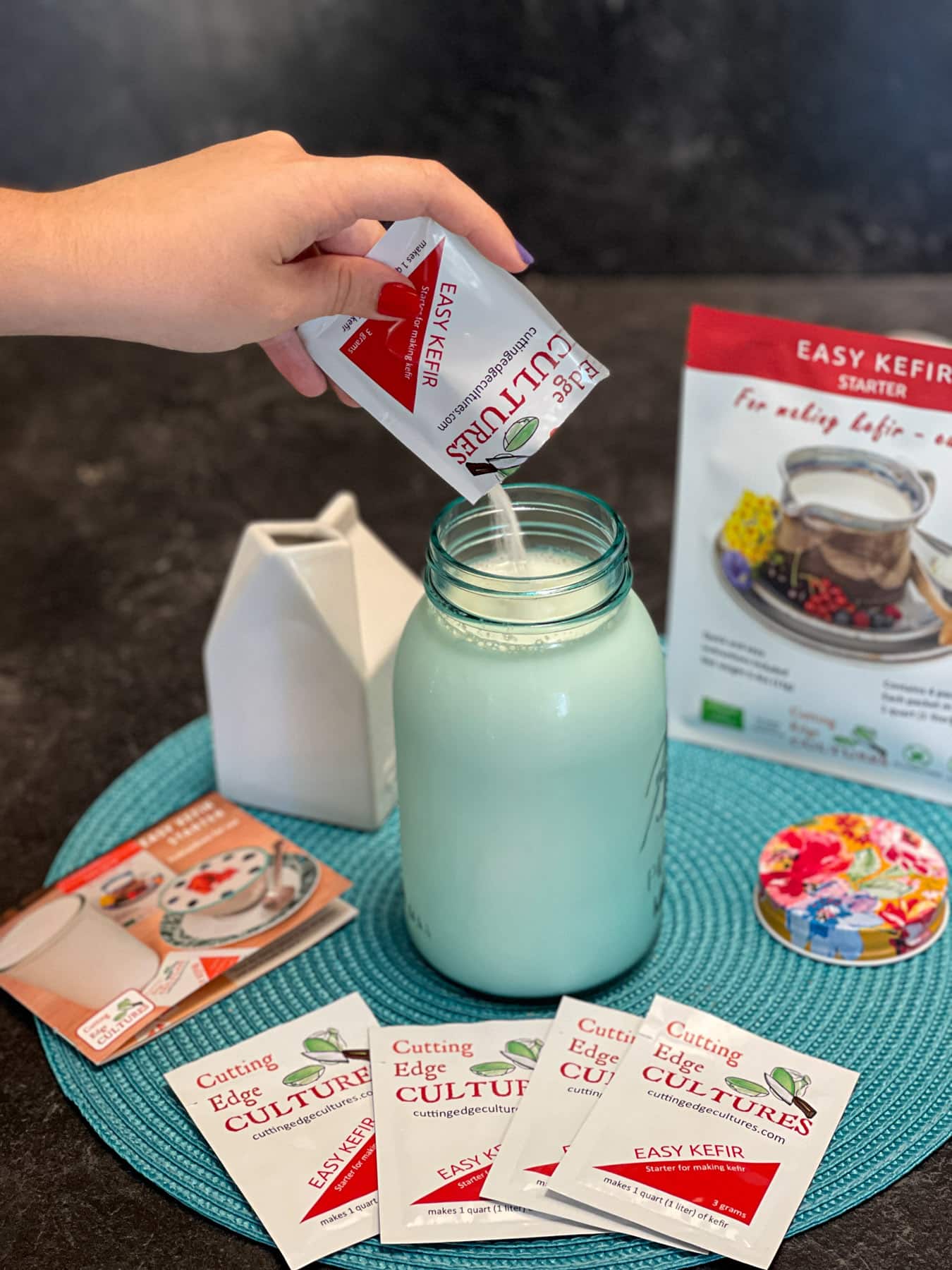
That is exactly why I love Easy Kefir for beginners. It allows someone to successfully make their very first batch without maintaining grains or buying special equipment. All you need is milk, a jar, and a packet of Easy Kefir.
Once people experience how easy it is—and how wonderful homemade kefir can make them feel—they often fall in love with it. Some are perfectly happy continuing with Easy Kefir, while others eventually decide they’re ready to try live kefir grains. Either way, Easy Kefir gives them a simple and encouraging place to begin.
Sometimes “Easy” Is Exactly What Someone Needs
Just this past weekend, I spent time with someone I had given Easy Kefir to several years ago. She told me again how much it had changed her life.
I will never forget the night she found me at a dinner, planted her chair next to mine, and asked for my help. She was running out of options and getting worse. She had been getting pneumonia nearly every year and was struggling with new food allergies, terrible coughing, and asthma. She had also taken many antibiotics and medications, but she felt they had only left her feeling worse.
I knew her well enough to understand that if I didn’t make this simple, she probably wouldn’t do it. So I gave her Easy Kefir and explained how to make it. She listened and said, “Okay, that sounds easy. I can do that.”
She began noticing changes almost immediately. She told me that her coughing stopped and that her reactions to foods disappeared—as long as she continued having kefir every day. At first, the change felt so dramatic that she questioned whether it could possibly be real. She even wondered if it was a placebo effect or if she was imagining the whole thing.
But that was several years ago, and she has been faithful about having kefir every day ever since. She told me she no longer needs her asthma inhaler, and the yearly bouts of sickness and pneumonia have stopped.
She is so committed to her kefir that when she travels, she freezes portions of it in little baggies. When she arrives at her destination, she uses one portion to make a fresh batch and drinks another while she waits for it to culture.
This is why making cultured foods easy matters so much to me. Sometimes people are exhausted, discouraged, and afraid to try one more thing. They don’t need complicated equipment or a long list of instructions. They need a simple place to begin—just like I did.
For her, Easy Kefir was something she felt she could actually do. She took that first small step, made it part of her daily life, and the rest is history.
The Easiest Cultured Food
 When people first discover cultured foods, they are often excited but also a little overwhelmed. They want to improve their gut health, but they aren’t sure which cultured food to make first—or whether they can keep up with feeding and caring for a living culture.
This is one of the reasons I love Easy Kefir.
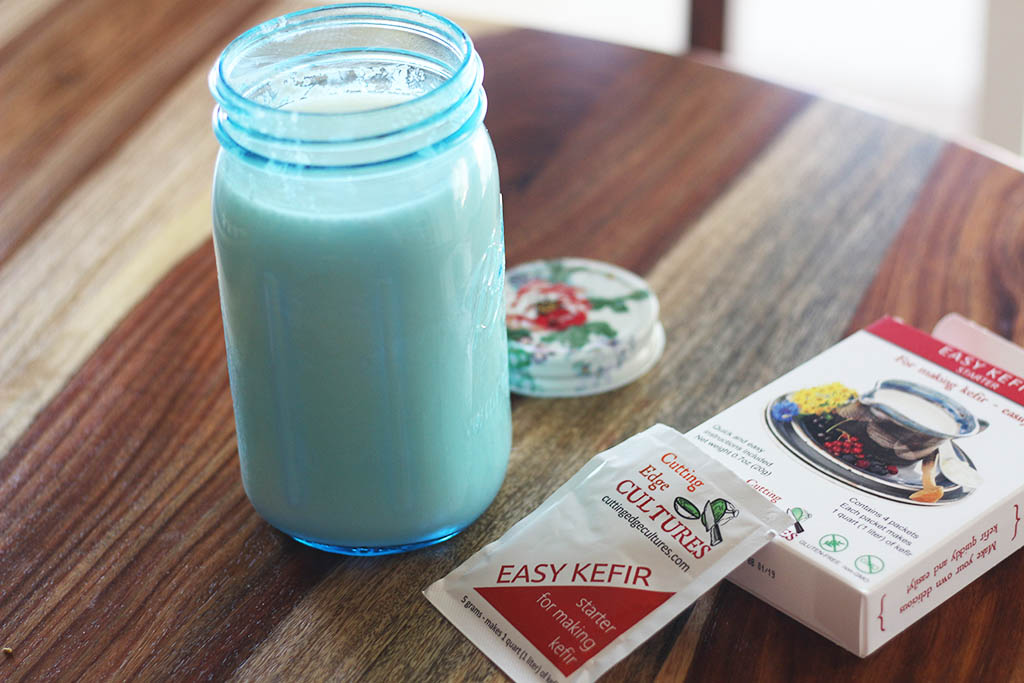
Easy Kefir lets you make homemade kefir without maintaining kefir grains or straining them out after every batch. You simply add one packet to a quart of milk, let it culture on your counter, and in about 18 to 24 hours, you have creamy, tart kefir filled with beneficial bacteria and yeasts.
It truly is one of the easiest ways to begin adding cultured foods to your life.
Kefir Changed Everything for Me
Kefir was the cultured food that started me on this journey more than 24 years ago. I began making it because I desperately needed help with my own health, and I had no idea how much this one food would change my life.
Over the years, kefir has become something I rely on every single day. It helped me understand that food isn’t just calories, protein, fat, and carbohydrates. Food also carries microbes—and those microbes can communicate with us in ways we are only beginning to understand.
Kefir is different from regular yogurt because it contains both beneficial bacteria and beneficial yeasts. These organisms work together to ferment the milk, transforming it into a completely different food.
Researchers have found that kefir can help improve the digestion and tolerance of lactose. Other studies have found that regular kefir consumption can create detectable changes in the gut microbiome and the metabolites produced by our microbes. [1,2,3]
I have watched kefir help so many people over the years, but sometimes people hesitate to make it because they feel intimidated by kefir grains. This is where Easy Kefir can be so helpful.
What Is Easy Kefir?
Traditional kefir is made with living kefir grains—small clusters of beneficial bacteria and yeasts that look a little like cauliflower. With proper care, they can last for generations, but they must be strained from each finished batch and added to fresh milk.
Easy Kefir is made with freeze-dried kefir grains and active bacteria and yeasts in a convenient powdered starter. It gives you the wonderful partnership of bacteria and yeasts found in kefir without the daily responsibility of maintaining and straining grains.
During fermentation, these microbes work together to consume the milk sugars and transform ordinary milk into thick, tart, easy-to-digest kefir. It’s especially helpful for beginners, busy families, travelers, or anyone looking for the simplest way to make homemade kefir.
Kefir and Lactose Digestion
Many people who have trouble digesting regular milk find that they tolerate kefir much better. This is because the microbes consume lactose—the natural sugar found in milk—during fermentation.
In a controlled study of adults with lactose maldigestion, kefir improved lactose digestion and tolerance compared with regular milk. [1]
Everybody is different, and a milk allergy is not the same as lactose intolerance. If you have a true milk allergy, dairy kefir may not be appropriate for you. But for people who struggle specifically with lactose, properly fermented kefir can sometimes be much easier to digest.
As always, start slowly and listen to your body.
You Can Make It Again and Again
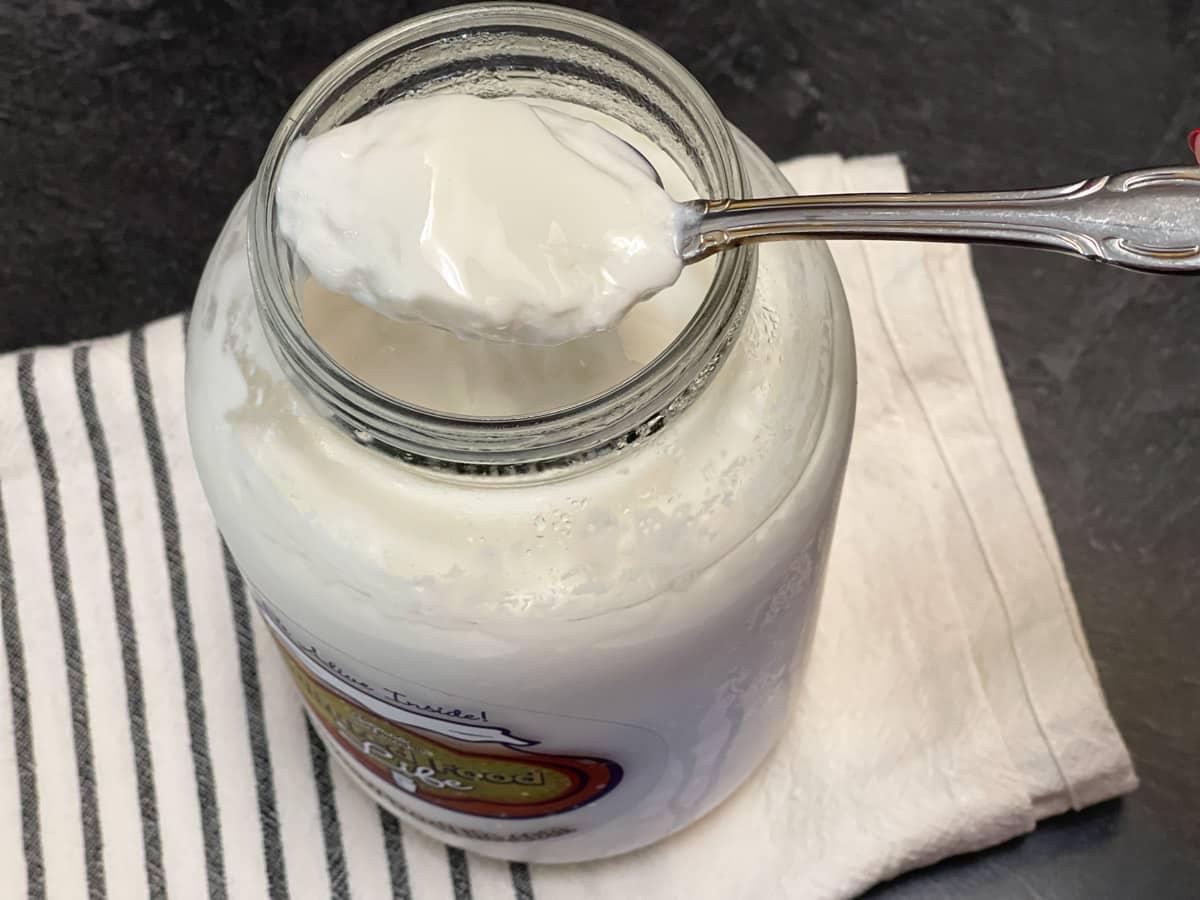 One of my favorite things about Easy Kefir is that one packet can make much more than one quart.
After you make your first batch, save ¼ cup of the finished kefir. Add it to fresh milk, let it culture again, and you have another quart.
Here are the amounts I use:
- For one quart, use ¼ cup of finished kefir.
- For one-half gallon, use ½ cup of finished kefir.
- For one gallon, use 1 cup of finished kefir.
You can usually reculture Easy Kefir at least seven times—and longer if you make it regularly. Continue using a portion of the previous batch until the kefir stops becoming thick and tart. Then it is time to begin again with a fresh packet.
This makes Easy Kefir both simple and economical. One little packet can produce many batches of homemade kefir.
What If My Kefir Separates?
If your kefir separates into thick curds and yellowish whey, don’t throw it away. This usually means it fermented too long, your room was too warm, or the starter was especially active.
The kefir is generally still fine if it smells fresh, pleasantly sour, and yeasty rather than spoiled.
You can stir the curds and whey back together, blend them into a smoothie, or strain the curds to make kefir cheese. You can also drink or use the whey in many different recipes.
On your next batch, shorten the fermentation time or move the jar to a cooler place.
Separated kefir is not necessarily failed kefir. It is often just very enthusiastic kefir!
Easy Kefir or Kefir Grains?
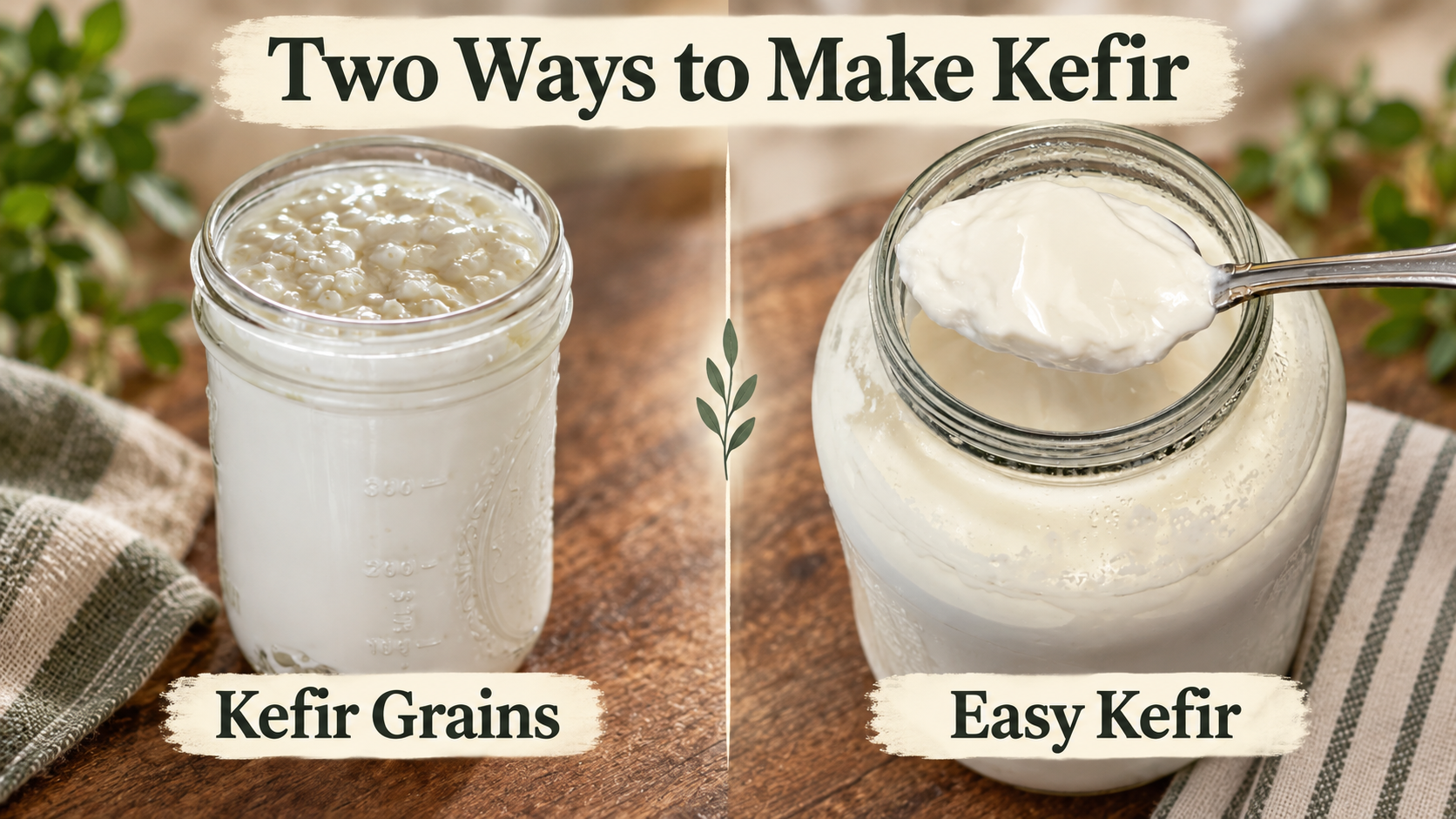 People often ask me which one is better. My answer depends on the person.
Kefir grains are wonderful if you want a living culture that can last indefinitely and you don’t mind straining and feeding the grains regularly.
Easy Kefir may be better if you:
- Are completely new to making cultured foods
- Don’t want to strain kefir grains
- Travel frequently
- Make kefir only occasionally
- Want a simple backup culture
- Have struggled to keep kefir grains healthy
- Want to make larger quantities easily
You don’t have to choose one forever. Many people begin with Easy Kefir, become comfortable with the culturing process, and then decide whether they want to move on to living kefir grains.
I keep and use both because each one serves a different purpose.
More Than Something You Drink
Kefir doesn’t have to be consumed plain. I use it in so many different ways.
You can make:
- Kefir smoothies
- Protein breakfast bowls
- Kefir cheese
- Salad dressings
- Cultured dips
- Frozen kefir desserts
- Overnight oats
- Sauces and spreads
- Second-fermented flavored kefir
One of the easiest ways to begin is to blend kefir with frozen berries and a little sweetener if needed. You can also strain it and use it anywhere you would normally use Greek yogurt, sour cream, or cream cheese.
Once kefir becomes part of your kitchen, you will find countless ways to use it.
How Much Should You Start With?
More is not always better, especially when you are introducing a powerful cultured food to a gut that isn’t accustomed to it.
Some people can drink an entire glass of kefir immediately and feel wonderful. Others do better beginning with a tablespoon or two and slowly increasing the amount.
Your body may need time to adjust to the new organisms and fermentation compounds. Starting slowly allows you to notice how your body responds.
Your body is always talking to you. Learning to listen is one of the most valuable things you can do.
The Most Important Ingredient Is Consistency
People are often searching for the newest probiotic strain or supplement, but sometimes the most powerful practice is also the simplest: regularly eating a cultured food you enjoy.
Kefir has remained part of my life for more than two decades because it is easy, affordable, versatile, and delicious. I don’t have to force myself to consume it. It naturally fits into my day.
Easy Kefir removes many of the obstacles that keep people from beginning. You don’t need special equipment, you don’t need to heat the milk, and you don’t have to maintain kefir grains.
You just need milk, a jar, a packet, and a little time.
That is the magic of fermentation. The smallest organisms can often make the biggest difference.
Watch the Video
In my video, I’ll show you exactly how I make Easy Kefir, how to tell when it is finished, and how to use a portion of one batch to make another. Once you see how simple it is, I think you’ll understand why I recommend Easy Kefir to so many beginners.
Check out My video!
How to Make Easy Kefir
You only need three things:
- One packet of Easy Kefir
- Four cups of milk
- One clean quart jar with a lid
Pour the milk into your jar. It can be cold from the refrigerator; you do not need to heat it.
Sprinkle the entire packet of Easy Kefir into the milk and stir well. Place the lid on the jar and let it culture at room temperature, ideally around 72–75°F, for approximately 18 to 24 hours.
Your kefir is ready when it has thickened, smells pleasantly sour, and has the consistency of pourable yogurt. Place it in the refrigerator to chill. Easy Kefir(opens in new tab)
Listen To My Podcast
Easy Kefir is the cultured food I recommend most often for beginners. In this episode, I’ll explain why I started with powdered kefir, how it differs from traditional kefir grains, and how you can make creamy, probiotic-rich kefir without straining grains or maintaining them every day. It’s a simple and dependable way to begin your cultured-food journey.
References I talked about:
References:
- Hertzler SR, Clancy SM. Kefir improves lactose digestion and tolerance in adults with lactose maldigestion. Journal of the American Dietetic Association. 2003. https://pubmed.ncbi.nlm.nih.gov/12728216/
- Walsh LH, et al. Comparison of the relative impacts of acute consumption of a commercial probiotic-containing fermented milk product and traditional kefir on the human gut microbiome and metabolome. 2023. https://pubmed.ncbi.nlm.nih.gov/37587110/
- Kairey L, et al. The effects of kefir consumption on human health: a systematic review of randomized controlled trials. Nutrition Reviews. 2023. https://pubmed.ncbi.nlm.nih.gov/35913411/
Are you on the list?
Sign up today and I'll send you my free Getting Started Guide!
Each week I'll send you updates, tips, recipes, and more! You might even be a winner of my weekly giveaway! (starter cultures, memberships, and more!)
Come be a part of my cultured food family!