Look for me on:



How Many Calories in Kefir?
I Make Kefir - What's Your superpower?
Milk Sugars in Kefir
Kefir Benefits
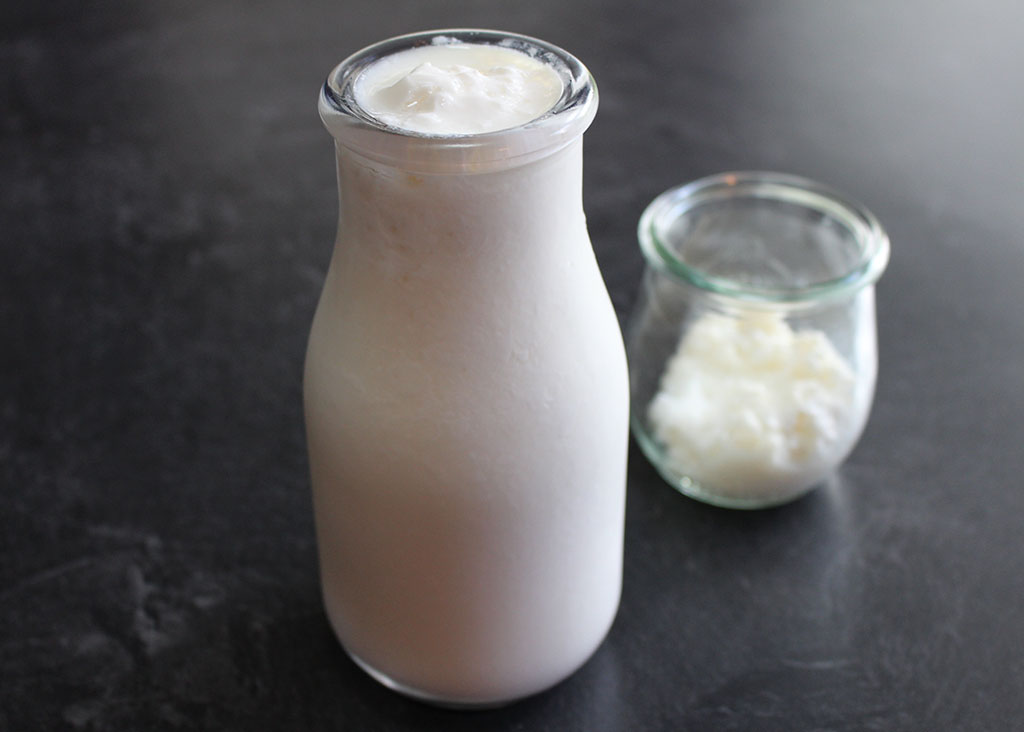
 Kefir can be made with many different kinds of milk, be it non-dairy or dairy milk. It differs in calories and nutritional differences depending on which type of milk you use. Kefir is far superior to regular milk. Fermentation is the alchemy of milk. It chemically breaks down milk with its abundance of bacteria and yeasts and converts the carbohydrates in the milk to lactic acid, leaving the milk with almost no lactose (99.9 % lactose-free). The lactic acid does have a small number of calories. The content of lactic acid is 0.7–1% of the finished product depending on fermentation time. Fermentation preserves the vitamins and minerals and increases C and B vitamins. It will help your digestion, boost your immune system, and give you loads of energy. Milk is demonized by many, and while milk has lost a lot of its nutritional benefits when it is pasteurized and homogenized, kefir transforms the milk into the healthy food that not only healed me but has healed thousands of others. It feels like a miracle to me. The process of fermentation is a gift to us all and it can heal and make us well. Make these microbes your friends and let them transform your foods into superfoods. Everybody can enjoy the benefits which is another reason I encourage you to make it a part of your life.
Label Confusion
 There is much confusion about the carbohydrate content on the packages of fermented food products. The government makes manufacturers count the carbohydrates of food “by difference.” That means they measure everything else including water, ash, fats, and proteins. Then, “by difference” they assume everything else is counted as a carbohydrate. This is standard procedure.
To make fermented foods (such as yogurt, kefir, and other fermented foods) the milk is inoculated with the lactic acid bacteria. These bacteria use up almost all the milk sugar called “lactose” and convert it into lactic acid. It is this lactic acid that curds the milk and gives that sour taste to the product. So the milk sugars that the government thinks are still in the product are actually gone. It’s been converted by these lactose-loving bacteria. Since these bacteria have “eaten” most of the milk sugar by the time you buy it (or make it yourself) there are not many carbohydrates left. It is the lactic acid that is counted as carbohydrates.
Therefore, you can eat up to a cup of plain yogurt, buttermilk, or kefir and only count 2-4 grams of carbohydrates. Dr. Jack Goldberg of Go-Diet has measured this in his own laboratory. Kefir is 99% lactose-free, which means all the milk sugars, or lactose, are mostly gone and this is why so many lactose-intolerant people don’t have a problem with kefir. One cup of yogurt will contain about 4 grams of carbohydrates. Kefir has about 1 since there are more bacteria in kefir to eat up the lactose.
Microbes Eat The Sugars
 Fermentation reduces the calories. One cup of whole milk has 12 grams of sugar (lactose) and 148 calories. Fermentation reduces the calories by 44 since most of the 12 grams of sugar will be gone. This would make whole milk kefir per cup, 104 calories versus 148 calories, and the sugar count would then be 1 gram or less, depending on how long you ferment it. There will be fewer calories in lower fat milk kefir, but this is a general rule. The microbes eat the milk sugars as a food source and you get probiotics instead of sugar. Pretty cool, don’t you think?
Goat Milk Has 47% Of The Vitamin A You Need
 If you want to make kefir with goat milk, you will still enjoy the benefit of reduced calories and sugars. I love goat milk, and it has different benefits from cow milk. Goat milk is easier to digest than cow milk, although transforming milk into kefir makes all the types of milk digestible through the process of fermentation. Goat milk has 47% of the vitamin A you need in a day, which is more than cow milk. However, cow milk has 50% of your B12 requirement for the day, which is more than goat milk. All of these vitamins will be more efficiently absorbed by the body when you make it into kefir. Goat milk kefir doesn’t get thick like cow milk kefir, but stays creamy. This is due to the fat globules in goat milk. These are much smaller than those in cow milk resulting in a creamier consistency.
Non-Dairy Kefir
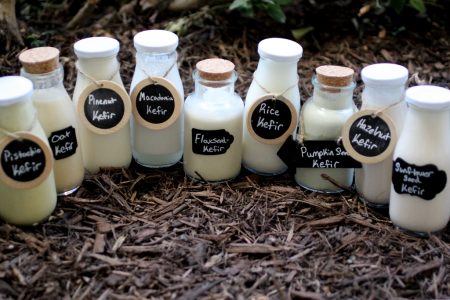 Non-dairy kefir also has many benefits, but most non-dairy milks have smaller amounts of sugars so you will need to add some source of fuel (sugar) for the microbes to convert into probiotics. Each non-dairy milk will vary in benefits; but for the most part, the calories will be the same since you're adding some kind of sugar in the form of date paste or raw sugar for the microbes to consume. (Amounts to use are in all my recipes.)
Kefir Calories
The wonderful thing about kefir is how easy it is for your body to digest it. Thanks to the help of its beneficial microbes, kefir is predigested and allows the body to speed the nutrients to the cells that need it for repair, growth, and detoxification.
Here is a breakdown of the calories in different types of milk kefir.
Listen To My Podcast
Kefir can be made with many different kinds of milk, be it non-dairy or dairy milk. It differs in calories and nutritional differences depending on which type of milk you use and how long you ferment it. There is much confusion about the carbohydrate content on the packages of fermented food products and I can help you figure this out. Check out the podcast to learn more.
References I talked about:
Are you on the list?
Sign up today and I'll send you my free Getting Started Guide!
Each week I'll send you updates, tips, recipes, and more! You might even be a winner of my weekly giveaway! (starter cultures, memberships, and more!)
Come be a part of my cultured food family!