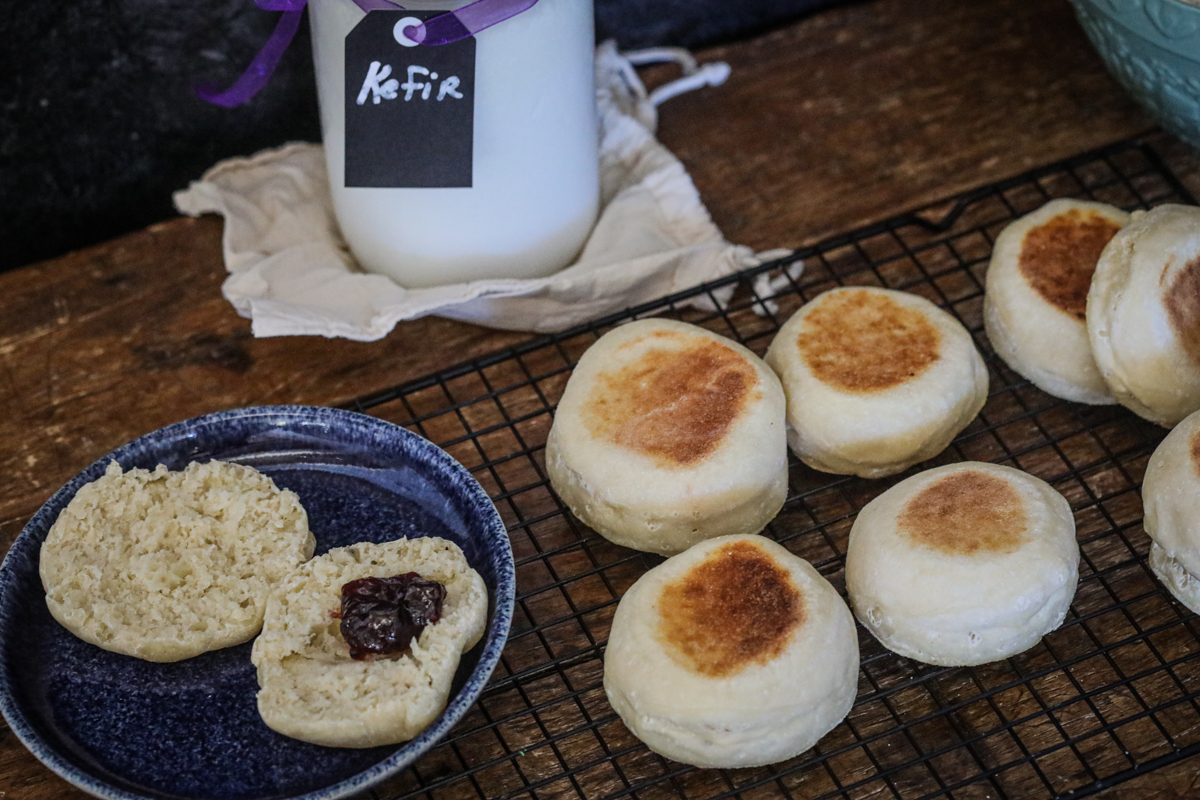
Kefir Sourdough English Muffins
What I’ve Learned Making These
Using both kefir and sourdough is what makes these English muffins so special to me. I love the rise I get with this dough, and the kefir adds a wonderful tenderness and flavor. These are two fermentation gems I’m always happy to bring together in my kitchen!There’s more happening during that overnight rest than just rising dough. Sourdough fermentation can help break down phytates in flour—compounds that bind some minerals. How much they break down depends on the flour and fermentation conditions. It’s one more reason I love giving my dough time to ferment.Although cooking kills many of kefir’s live microbes, it doesn’t take away everything kefir brings to a recipe. I still love using this nourishing food for the flavor and texture it adds to my baked goods.But there’s something else I love just as much: the experience of making food at home with my sourdough starter. Mixing the dough, letting it rise overnight, and cooking a batch of English muffins the next morning brings such a comforting rhythm to my life.When I look at the long ingredient lists on some packaged foods, I’m reminded why I keep coming back to homemade. I get to choose what goes into my food. Flour, kefir, sourdough starter, and a little time become something wonderful to share at the table. It’s a choice I make in my daily life, and one that continues to bring me so much joy. ❤️Servings: 12
Calories: 154kcal
Ingredients
- ½ cup Bubbly Sourdough Starter 100 grams
- 1 tablespoon honey 20 grams
- ½ cup Kefir 120 grams
- ½ cup milk 120 grams (any kind of milk can be used)
- 3 cups Flour 360 grams — white unbleached flour, white whole wheat, or spelt. Whole wheat flour will be denser and won’t rise as much as white flour. For your first few loaves, you'll have more success if you don't use whole wheat flour. Don’t use gluten-free flours.
- 1 teaspoon Celtic Sea Salt
- ¼ cup cornmeal (for sprinkling)
Instructions
The night before you want the muffins
- Make sure your starter has been fed and is bubbly before you use it.
- Add the active bubbly starter and the rest of the ingredients (except cornmeal) to a large bowl and use your hands to mix until well combined. You can also use a stand mixer with a dough hook attachment to knead the dough. Mix on lowest speed for 5 minutes.
- Cover and let the dough rest for 30 minutes.
- Turn the dough out onto a floured surface and knead the dough for 3-5 minutes.
- Place the dough back into the bowl, cover and let ferment on the counter at room temperature 10-14 hours. It will look like it's risen in the bowl when it's ready.
In the Morning
- Turn the dough out onto a floured surface that is dusted with the cornmeal as well. Flour the top of the dough and press it out using your fingertips until it is ½" in thickness.
- Use a 3" biscuit cutter to cut rounds and place them on a parchment-lined baking sheet. Cover with a tea towel and allow to rise for 1 hour at room temperature. They don't need to double in size, they will expand more when you cook them.
- Preheat your cast iron or non-stick skillet over LOW heat. Place 4 muffins into the skillet spaced 2" apart, and cook the first side for 4-6 minutes or until the bottom start to turn brown. Turn the muffins over and cook for an additional 4-6 minutes.
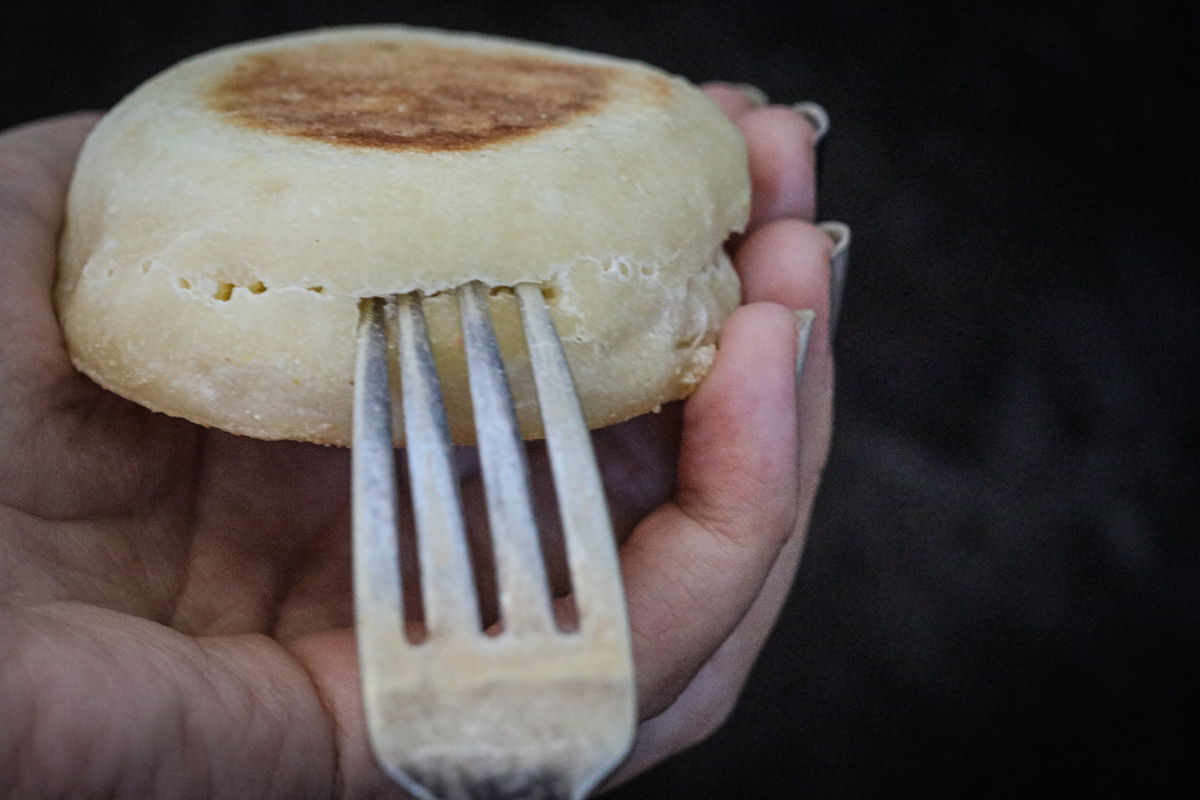
- Let them cool or eat them warm, but use a fork to split them to allow for more nooks and crannies.
Video
Notes
- Store at room temperature for up to 5 days in a container.
- Freeze for up to 3 months.
Nutrition
Calories: 154kcal | Carbohydrates: 31g | Protein: 4g | Fat: 1g | Saturated Fat: 0.5g | Polyunsaturated Fat: 0.2g | Monounsaturated Fat: 0.2g | Cholesterol: 2mg | Sodium: 10mg | Potassium: 60mg | Fiber: 1g | Sugar: 3g | Vitamin A: 37IU | Vitamin C: 0.01mg | Calcium: 30mg | Iron: 2mg
www.CulturedFoodLife.com